
The design philosophies of prison sinks and commercial sinks are completely different. Commercial sinks focus on appearance, hygiene, and convenience, while prison sinks focus on safety and durability. One emphasizes usability, and the other emphasizes safety. The different environments they face determine the differences in their design concepts.
In this article, we’ll compare the specific differences between prison sinks and commercial sinks to help you make better purchasing decisions.
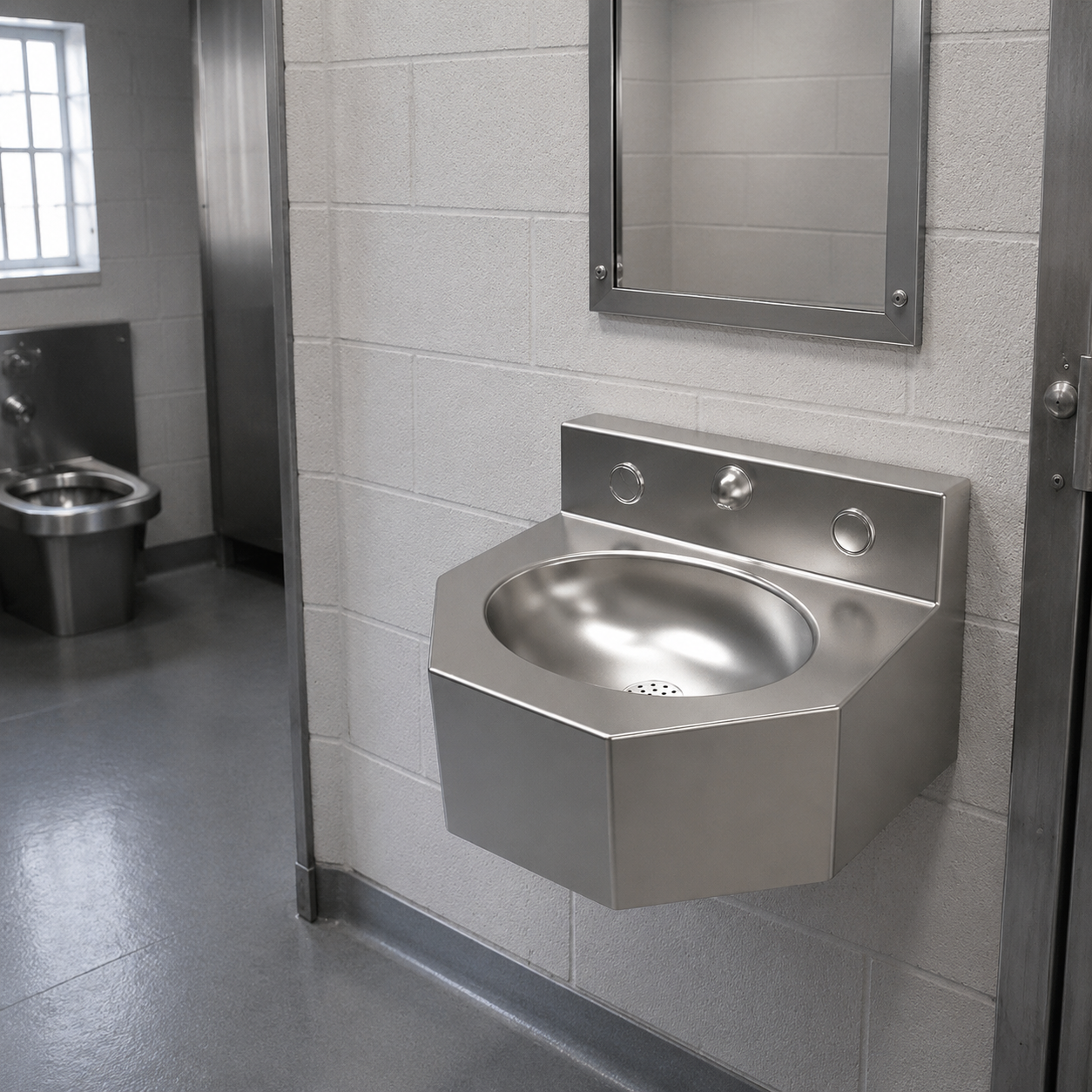
A Detailed Comparison of Prison Sinks and Commercial Sinks:
| Comparison Projects | Correctional Sink (Prison Sink) | Standard commercial sink |
| Usage Environment | Prisons, detention centers, detention facilities, mental health institutions | Restaurants, factories, schools, public restrooms |
| Core requirements | Safety and vandalism prevention | Easy to use and durable |
| Material | Typically 304/316 stainless steel | Stainless steel, ceramics, plastics, etc. |
| steel plate thickness | Usually thicker | Normal thickness is sufficient |
| structure | Integration and structural enhancement | Standard splicing structure |
| Installation method | Concealed fixing, anti-disassembly | Ordinary screw fixing |
| Corner design | Rounded corners, damage-proof design | Standard folding |
| Pipeline design | Concealed, vandal-proof | Exposed or normally concealed |
| Service life | 20 years or more | Approximately 5-15 years |
The Core Difference between Prison Sinks and Commercial Sinks
1.Different Structures
Prison water tanks often use a one-piece stainless steel structure, which is hydraulically formed in one piece to reduce gaps in the joints and improve the overall load-bearing strength of the water tank.
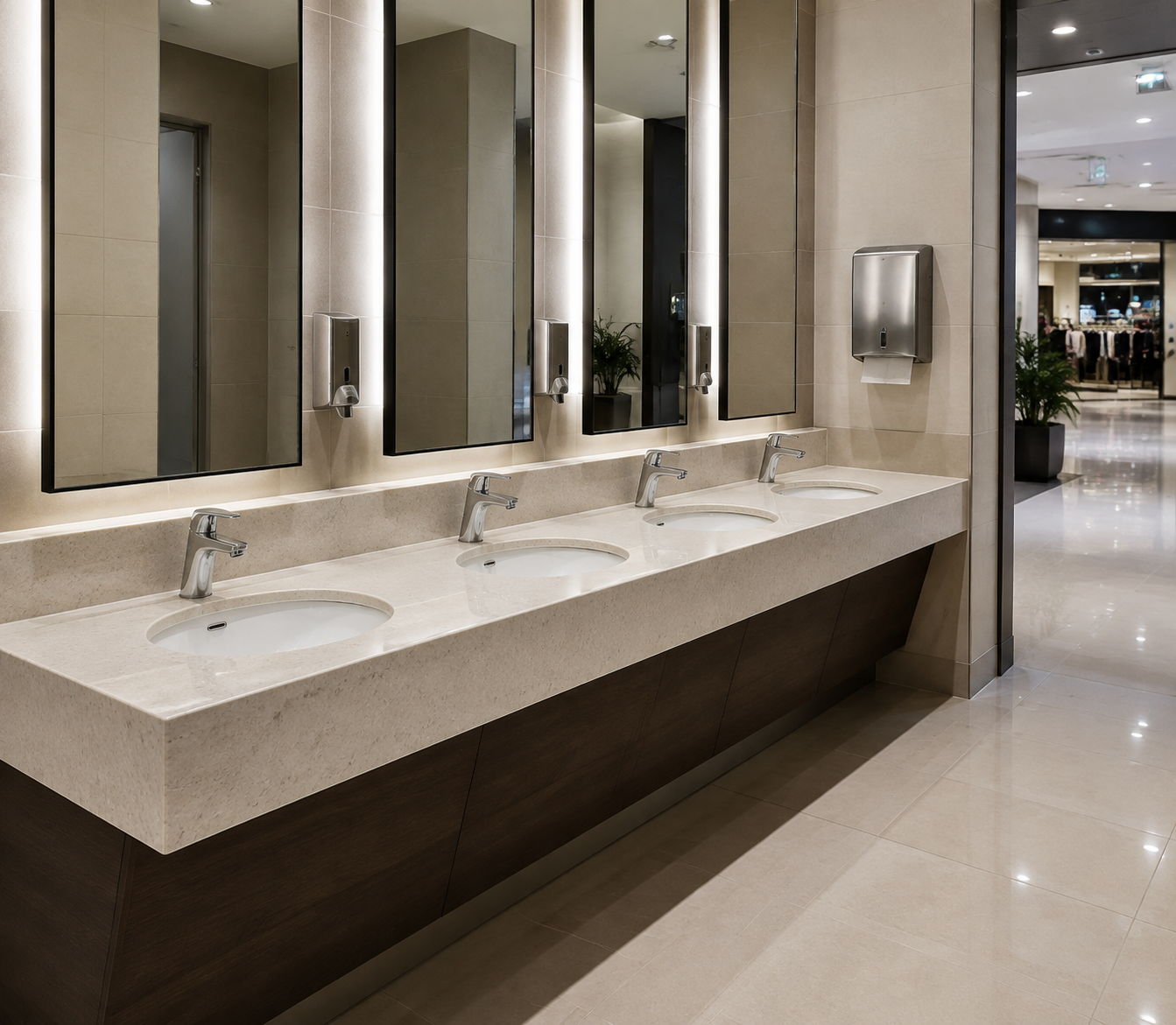
Commercial sinks often use a modular structure, with the countertop, basin, and faucet all separate, making the structure more flexible.
2.Different Materials and Thicknesses
Prison sinks are typically made of 304/316 stainless steel because of its high strength and resistance to damage. Commercial sinks, on the other hand, are made from a variety of materials, including ceramic, plastic, and stainless steel. If both are made of stainless steel, prison sinks are usually much thicker than commercial sinks. Prison sinks typically have a stainless steel plate thickness of 1.2-1.5 mm, while commercial sinks are usually 0.6-0.8 mm thick. The former is heavier and needs to withstand violent damage, while the latter is much lighter.
3.Anti-disassembly
To prevent unauthorized disassembly, the prison sink’s components are all hidden inside, and the mounting brackets are also concealed within the wall. Once installed, they cannot be accessed or disassembled.
Commercial sinks are the complete opposite; the faucets, screws, and water pipes are all detachable, making them convenient for timely repairs.
4.Suicide Prevention
To prevent suicide, the prison water tanks have eliminated all hanging points and rounded all sharp corners and edges, ensuring a completely rounded design and minimizing the risk of injury.
Commercial sinks, on the other hand, are designed for aesthetic purposes and typically feature prominent structures with sharp angles, which is the most obvious difference in appearance.
5.Different Usage Scenarios
Prison water tanks are used only in specific correctional facilities, such as prisons, detention centers, detention centers, and police stations.
Commercial sinks have a wide range of uses and can be used in most public places, such as toilets, schools, hospitals, factories, and outdoor restrooms.
6.Price and Lifespan Differ
Prison water tanks are made of thick steel plates and feature a one-piece welding process; a single unit typically costs between 500 and 2000 yuan; their normal service life is 10 to 20 years, with very few instances of damage.
Ordinary commercial stainless steel sinks are mostly priced between 100 and 400 yuan, and need to be replaced after a normal service life of 3 to 8 years .
Summarize:
All aspects of the prison water tank are designed to prevent damage or tampering, while also protecting the user’s safety and eliminating the risk of potential self-harm or injury.
Commercial sinks, in addition to meeting basic washing needs, are mainly designed for aesthetics and convenience, based on commercial logic, to make users comfortable to use.
FAQ
1.Can commercial stainless steel sinks replace prison sinks?
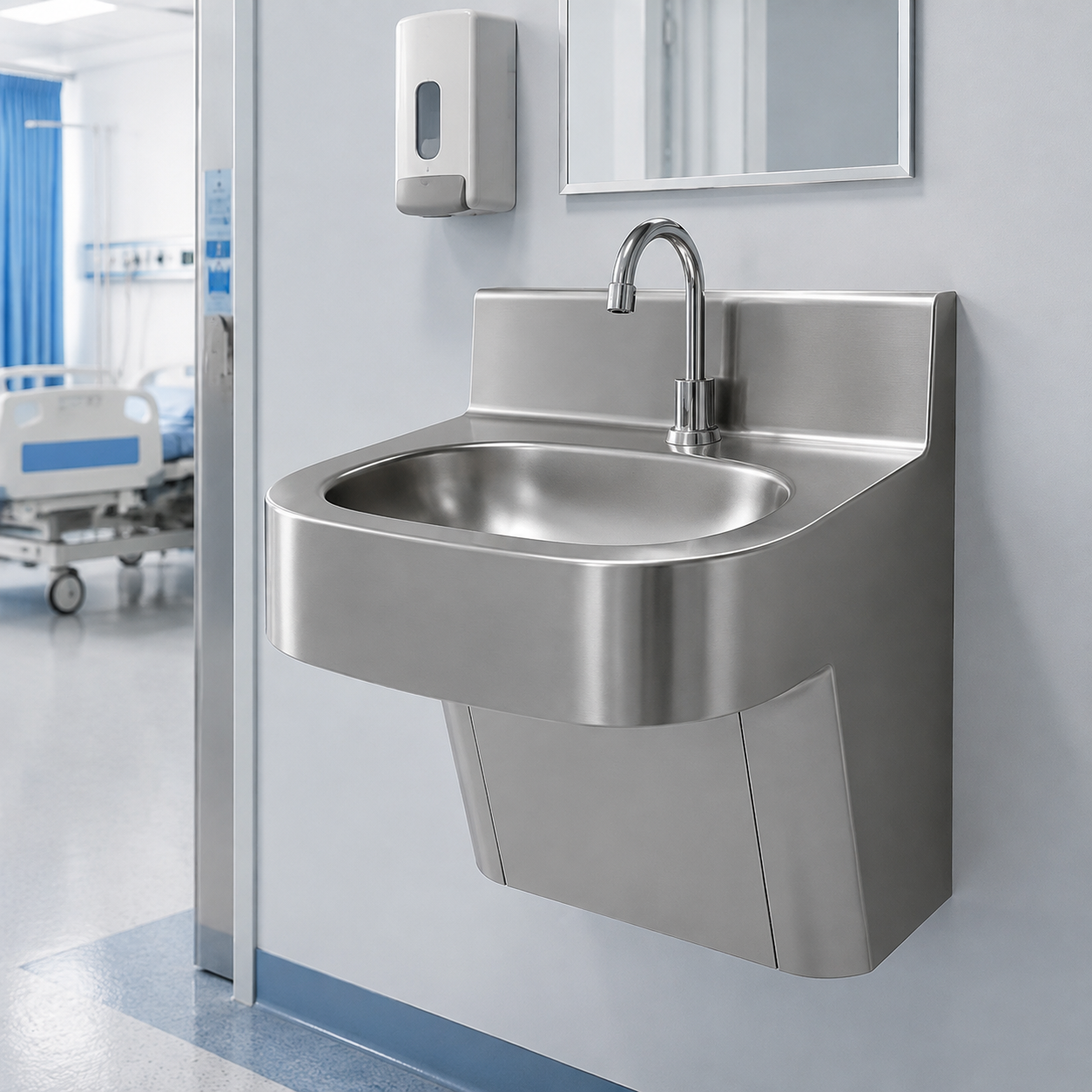
No. Ordinary commercial sinks have sharp edges, easily disassembled parts, fragile materials, and exposed gaps, posing significant safety hazards and failing to meet prison security management standards.
2: What is the best material for prison water tanks?
Thickened 304 stainless steel is the mainstream and cost-effective choice; 316 stainless steel is recommended for coastal or high-frequency chemical disinfection environments, as it has better corrosion resistance.
3: Why are prison water tanks designed as a single unit?
The one-piece seamless structure eliminates detachable parts and hidden gaps, preventing the concealment of contraband and violent dismantling, and greatly improving the stability and safety of the overall structure.
4 : What are integrated handwashing basins and toilets in prisons?
This is a welded, integrated sanitation unit designed specifically for prison cells, combining the sink and toilet into a seamless structure. It eliminates detachable, separate fittings and exposed piping, saving cell space, eliminating hidden gaps for concealing contraband, and maximizing vandal and tamper resistance.
Where can I purchase prison water tanks?
BaCai Stainless Steel Products Factory is a professional manufacturer of prison sinks, located in Suzhou, Jiangsu Province, China. The factory covers an area of 15,000 square meters and has more than 100 employees. Our prison supplies have been sold to more than 100 countries and regions, and we have served more than 200 prison projects. We have won the trust of the market with our excellent quality and consistent delivery.