
Sinks are one of the most frequently used and widely touched fixtures in public restrooms and home spaces, and their safety, durability, and ease of installation directly affect user experience and maintenance costs. Traditional ceramic sinks look smooth and clean, but they have inherent drawbacks like being fragile and prone to chipping, which can cause injuries, and they rely on wet installation methods. On the other hand, steel sheet sinks often struggle with corrosion resistance and structural rigidity. Against this backdrop, modular sinks made primarily of austenitic stainless steel have become a preferred alternative due to their high strength, corrosion resistance, and ease of fabrication.
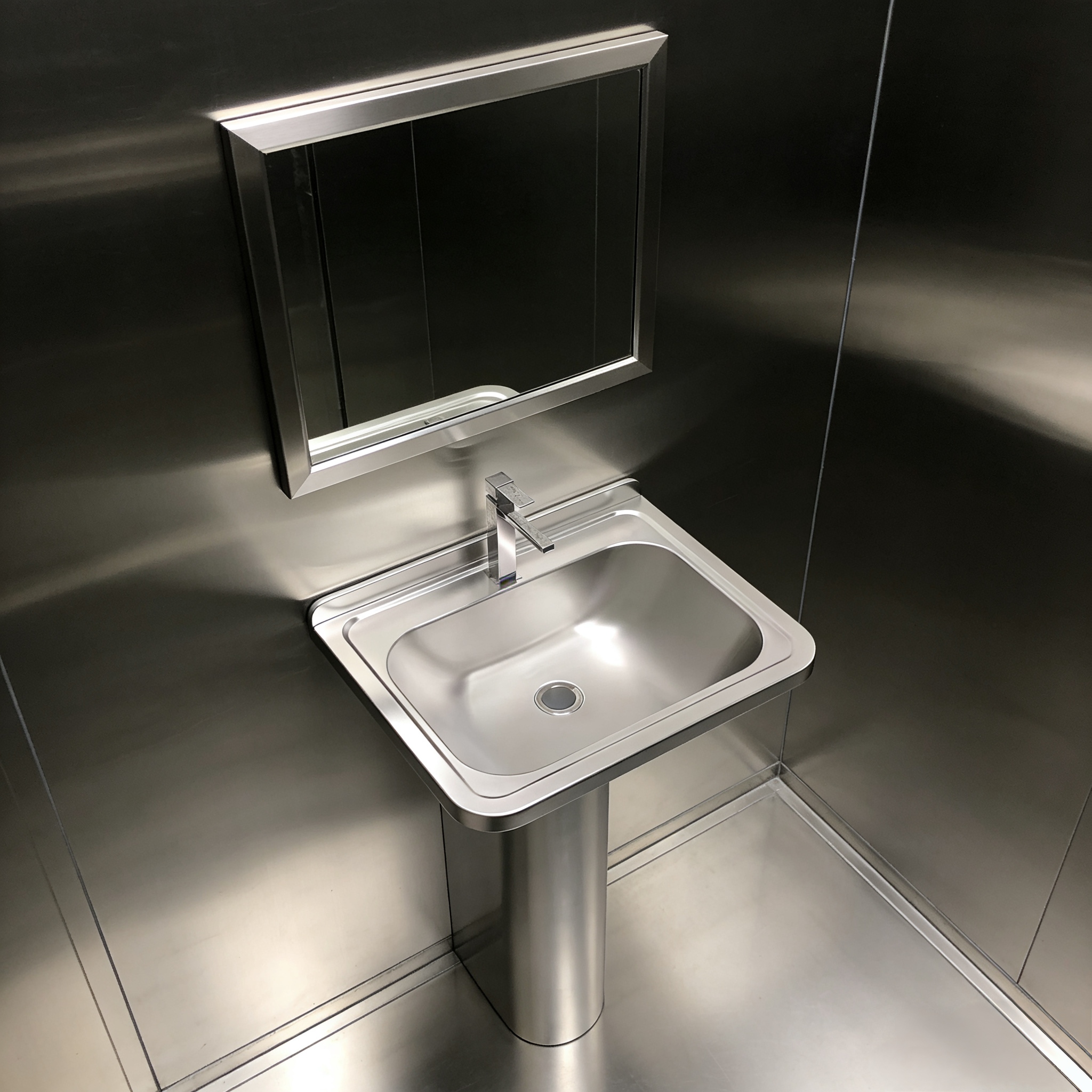
1 Material Basics: The Structure and Performance Support of SUS304 Stainless Steel
1.1 Mechanical and Corrosion-Resistant Properties of SUS304
SUS304 is an austenitic stainless steel, containing about 18% chromium and 8% nickel. Its face-centered cubic lattice gives the material excellent plasticity and formability, with a yield strength of around 205 MPa or higher and a tensile strength of no less than 520 MPa. It can withstand repeated daily stepping, leaning, and water pressure from washing without permanent deformation. More importantly, it is self-passivating: its surface quickly forms a dense chromium oxide passivation layer when exposed to air. If the layer is damaged, it can repair itself in an oxygen-rich environment, helping resist corrosion from water, detergents, and common corrosive substances.
1.2 Advantages Compared to Ceramic Materials
Traditional ceramic sinks are made by high-temperature firing of clay, and they have poor impact toughness. They can chip, crack, or even shatter when hit with hard objects, and broken edges can form sharp points, creating safety hazards. Plus, ceramic products have fixed shapes, making it hard to adjust corner designs. Stainless steel sinks, on the other hand, replace the brittleness of ceramics with metal plasticity. When impacted, they only deform elastically or dent locally, which makes them much less likely to chip and cause injuries.
2 One of the Three Core Designs: Rounded Corners to Prevent Bumps
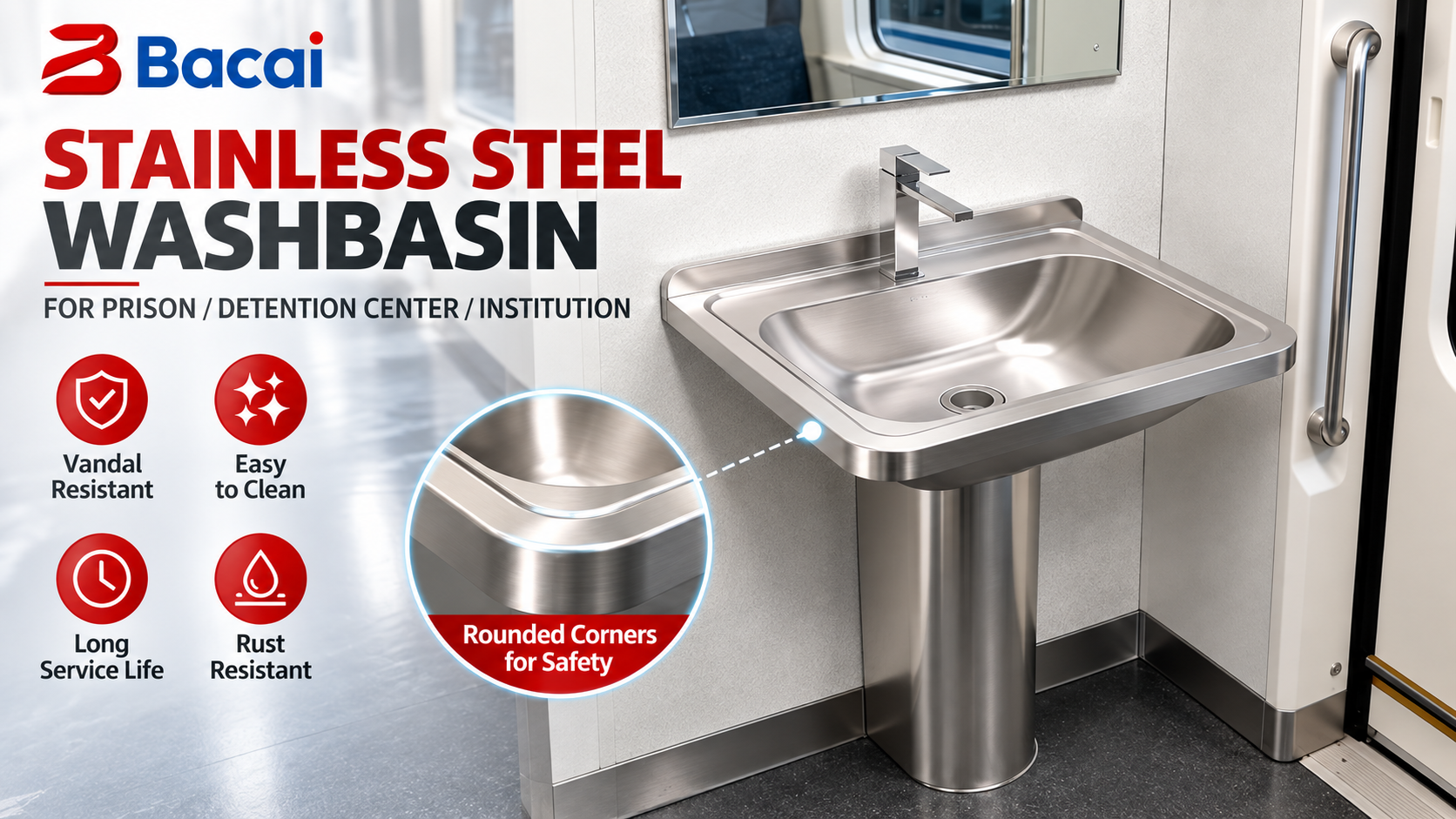
2.1 Design Concept and Safety Logic
Public restrooms are usually cramped, with people moving around frequently, and the edges of sinks are the most common spots for bumps. Sharp or right angles, when hit, concentrate the impact stress on a very small area, which can easily cause bruising, cuts, or even head injuries. This risk is particularly high for children, the elderly, and those with limited mobility. The core idea behind rounded corners is to use curved transitions to eliminate stress concentration points, turning point contact into surface contact, which significantly reduces the impact pressure per unit area and lessens the severity of injuries. This principle aligns with building codes that require indoor protrusions to have rounded edges for safety.
2.2 How Rounded Corners Are Achieved
To achieve rounded corners on stainless steel sinks, mature cold-bending and welding techniques are used. The edges of the sink can be bent into a curve with a bending machine, or naturally transitioned through one-piece stretching. Rounded welding is applied at the junctions of columns and the sink, as well as at cabinet corners, and the weld seams are polished to smoothly blend with the base material. Compared to ceramic, which is hard to control precisely during shaping, stainless steel corners can achieve millimeter-level radius control, balancing safety and aesthetics.
2.3 Additional Protective Benefits
Besides preventing bumps, rounded corners have two extra benefits: first, curved surfaces are easier to clean, with no sharp corners where dirt can accumulate, meeting public hygiene standards; second, rounded corners get rid of sharp metal burrs and welding edges, preventing hand injuries. This is especially valuable in child-friendly restrooms, hospitals, and other safety-sensitive environments.
3 Core Design Two: Easy Installation
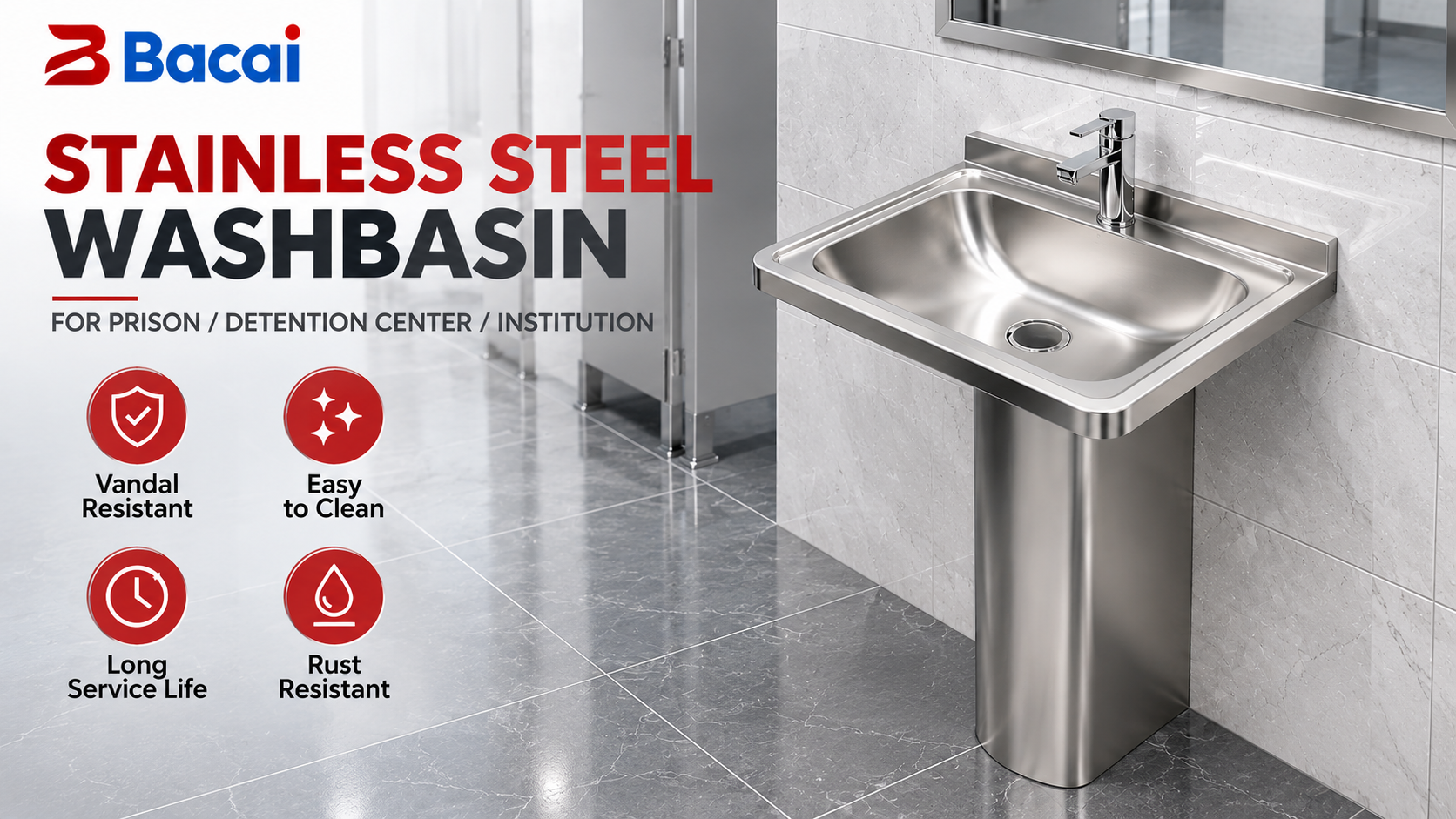
3.1 Installation Logic of Modular Structures
The stainless steel modular washbasin adopts a separate, modular structure of “basin body – column/support – countertop – plumbing components,” with the reference product showing a square basin paired with a cylindrical column. This design shifts the installation from the traditional “wet work – mortar leveling” to “dry work – bolt fixing”:
Eliminating wet work: Traditional ceramic under-counter or above-counter basins require building a base, embedding pipes, and leveling with cement, which takes a long time and depends on skilled masons. Stainless steel modular units can fix the column directly using embedded bolts or expansion bolts. The basin, countertop, and panels are all prefabricated in the factory; on-site assembly is enough, greatly improving installation efficiency.
Modularity allows adjustments: The separate components can be replaced individually, so if a part is damaged, there’s no need to remove the whole unit. Standardized plumbing interfaces can flexibly match on-site pipe locations.
Less dependency on skilled labor: Assembly-style installation requires less worker skill. Ordinary installers can handle it after simple training, easing the shortage of specialized workers and reducing labor costs.
3.2 Coordination with Plumbing Systems
The water inlet and outlet interfaces of stainless steel washbasins are designed according to general sanitaryware standards, similar to the toilet flushing devices we discussed earlier (gravity tanks, inlet valves, drain valves). The inlet valve needs anti-siphon functionality, and the drain components must ensure smooth slope and reliable sealing. The modular structure makes maintenance easier: easily worn parts like water valves and P-traps can be removed individually from below or the side, without damaging walls or countertops, significantly reducing future maintenance difficulty.
3.3 Space Adaptability
The column structure does not rely on wall support and can be independently placed in open spaces without real partitions, making it suitable for schools, stations, hospitals, and other places needing flexible separation. Compared with ceramic countertops that must be installed against a wall, the “stand-alone” design of stainless steel column washbasins provides much more installation freedom.
4 Core Design Three: Sturdy and Durable
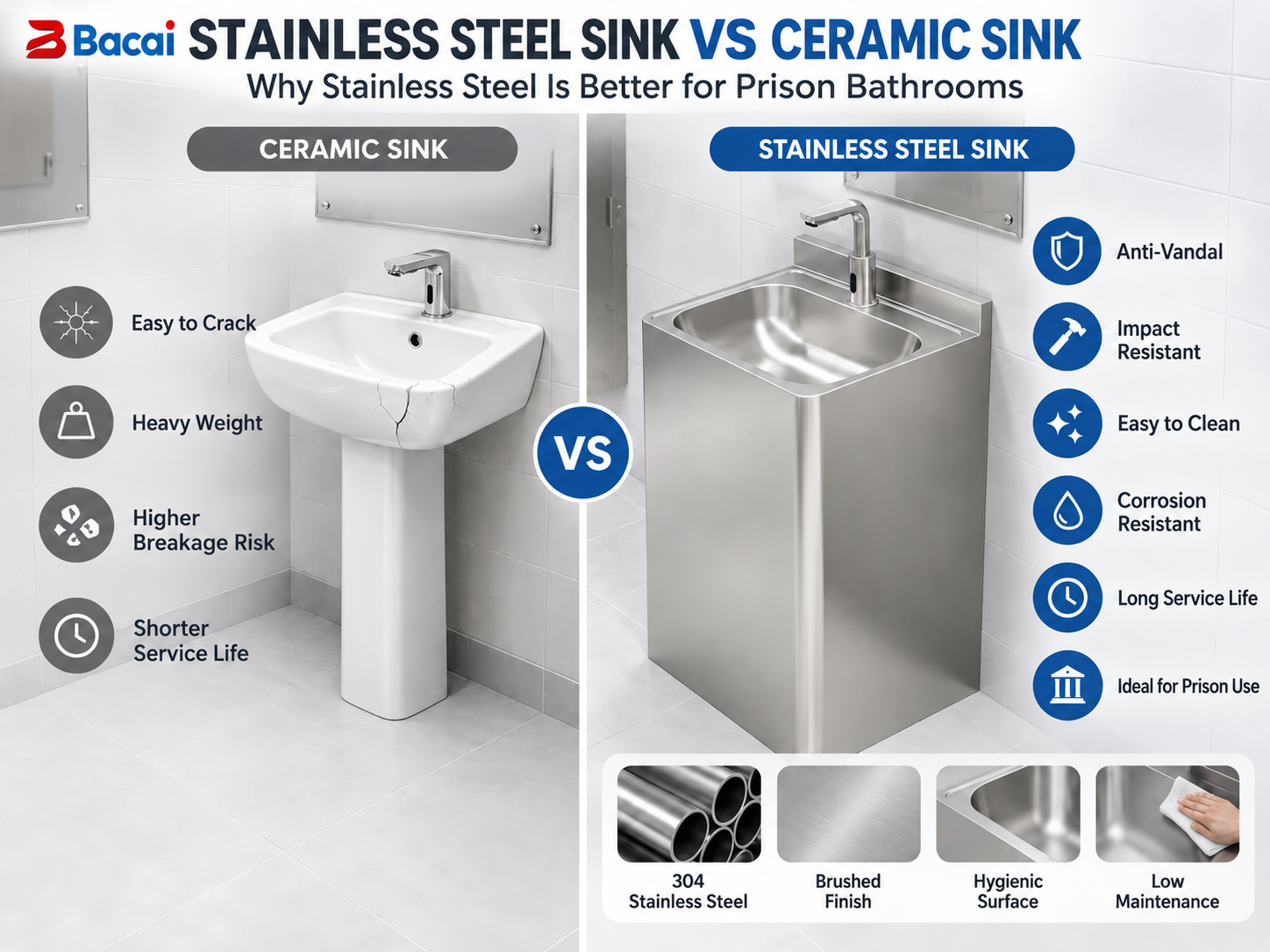
4.1 Structural Strength and Load-Bearing Design
The structural strength of stainless steel washbasins is reflected mechanically: the columns act as the main load-bearing elements, transferring the weight of the basin and any load from users to the floor, preventing stress from concentrating at a single point. Reinforcing ribs or integrally pressed ribs can be added to the bottom of the basin to prevent bending under large spans. The square basin combined with cylindrical columns forms a stable geometric support system, with strong resistance to lateral push and vertical loads, allowing it to maintain structural stability under frequent use over time.
4.2 The Decisive Role of Welding and Surface Treatment in Lifespan
Durability relies on corrosion resistance. Stainless steel isn’t completely rust-proof, and its lifespan depends on three factors: material composition, weld quality, and surface treatment.
Welds are weak points: the heat-affected zone of welding causes grain coarsening and residual stress concentration. If acid pickling and passivation are not performed after welding, the passivation layer at the weld won’t fully rebuild, becoming a starting point for pitting and corrosion. Therefore, finished products must undergo acid pickling and passivation to remove oxidation and restore the passivation layer.
Surface finish: brushing, mirror polishing, and other surface treatments not only improve the look but also reduce surfaces where dirt and bacteria can attach. Combined with rounded corners and smooth welds, this minimizes accumulation points and extends service life.
Environmental adaptation: in typical indoor environments, SUS304 washbasins can usually last over 20 years. In coastal areas with high salt exposure or frequent use of chlorine disinfectants, upgrading to 316L material or thicker panels is recommended to resist chloride-induced passivation damage.
4.3 Lifecycle Cost Advantage
Although stainless steel washbasins have a higher initial price than some low-end ceramic ones, they offer clear advantages over their lifecycle: ceramic basins break and must be fully replaced, with costly wet installation rework. Stainless steel basins can be partially repaired, surface scratches can be polished out, and parts can be replaced individually, without frequent consumables. Low maintenance in operations makes them more economical for public construction projects.
5 Conclusion
Stainless steel modular washbasins unify the core requirements into one product system through SUS304 material and modular design. Rounded corners improve safety by eliminating sharp edges, modular structures make installation and maintenance more efficient, and corrosion-resistant stainless steel ensures long-term durability over the full lifecycle. Compared with traditional ceramic basins, they show significant advantages in safety, construction efficiency, ease of maintenance, and durability, making them especially suitable for schools, hospitals, and other high-demand public spaces.