
When it comes to upgrading public health facilities and bathroom systems in special scenarios, traditional ceramic sink-and-toilet combos often have problems like dirt-trapping seams, poor impact resistance, and complicated installations. They’re just not cut out for places that need high reliability and easy maintenance. Stainless steel all-in-one sink-toilet units, which merge the sink and toilet into a single piece, have become really popular recently in places like mine shelters, mobile emergency setups, and busy public restrooms, thanks to their durability and easy upkeep.
These units keep the strong, durable nature of stainless steel and feature dual independent drains, which help prevent cross-contamination issues that can happen with regular wastewater backflow systems. Because of this, they’re spreading quickly in mining emergency areas, mobile public facilities, and specialized monitored zones.
Today, we’ll go over everything about these all-in-one sink-toilet units, from where they can be used to performance features, so you can make the best choice when buying one.
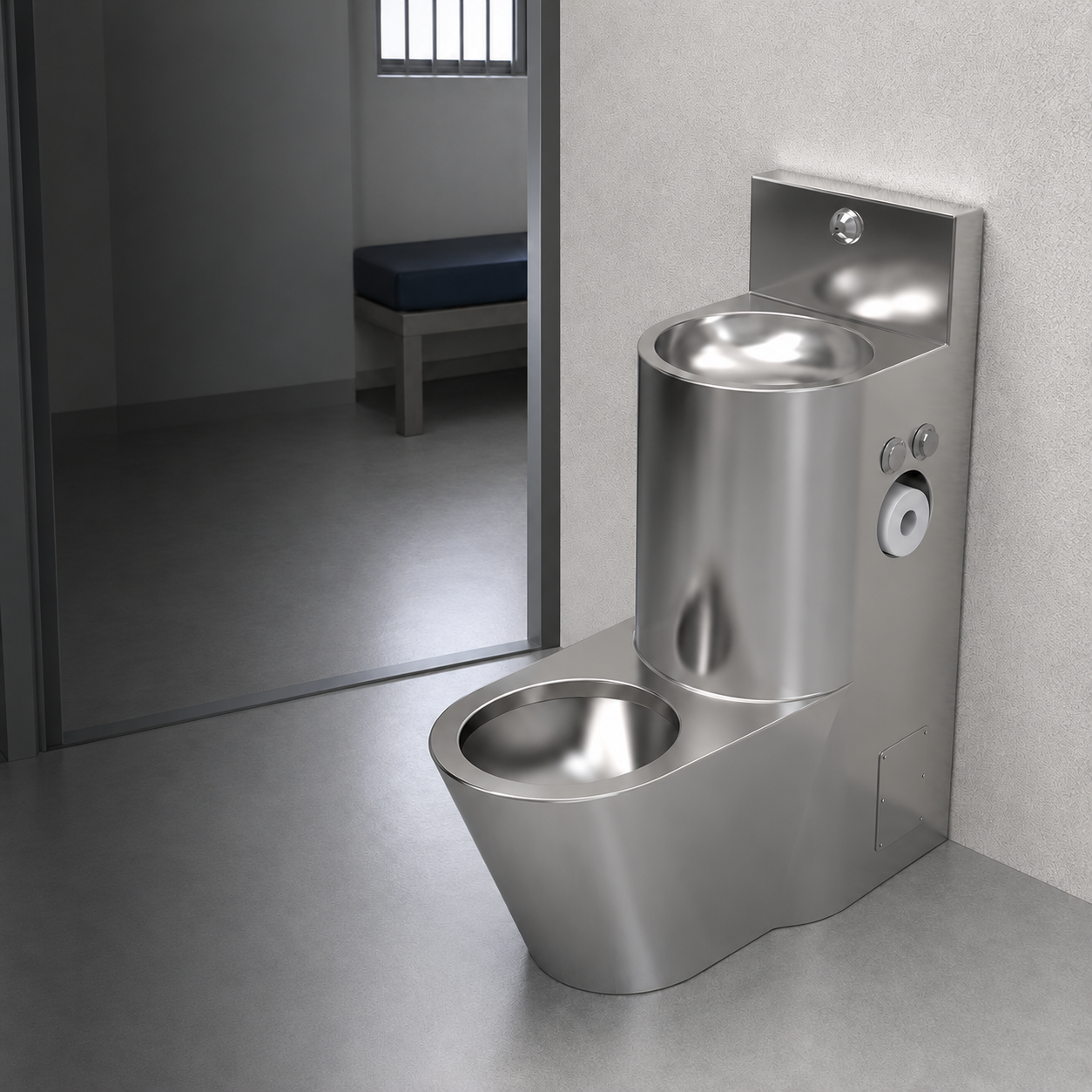
1 Definition of Stainless Steel Integrated Sink-Toilet
A stainless steel integrated sink-toilet refers to a sanitary fixture made primarily from food-grade or engineering-grade 304 stainless steel, with the sink and toilet each having completely independent water supply lines and separate drainage channels. The two units do not share waste water through internal pipes; instead, they rely on a rigid connection formed by the integrated stamped stainless steel frame.
2 Best Use Scenarios for Stainless Steel Integrated Sink-Toilet
Thanks to its design with dual independent drainage outlets, this type of product can offer far greater practical value than traditional products in environments with strict hygiene, structural strength, and installation efficiency requirements. There are four key scenarios where it is most suitable.
2.1 Special Emergency Workspaces
The first type includes underground coal mine refuge chambers and emergency survival pods. These locations are often in extreme underground conditions with high humidity and dust, requiring high structural strength and sanitary safety for bathroom fixtures. The dual independent drainage design prevents waste water from accumulating and causing blockages. The stainless steel frame is highly impact and corrosion resistant, so even if slight structural vibrations occur in the chamber, the bathroom unit won’t shift or break, ensuring long-term stable use in extreme conditions. Its compact, integrated layout also saves the limited space in the chamber, leaving more room for emergency supplies.
2.2 Bathroom Spaces in Supervised Areas
The second type includes toilets in detention centers and holding rooms. In these spaces, bathroom facilities must be vandal-resistant, without protruding or easily removable parts, and have no hidden areas that are difficult to clean. Stainless steel integrated units with dual independent drainage meet these requirements. Their solid structure cannot be easily damaged, and the two fully enclosed drainage channels have no gaps that could be misused, thus meeting the safety control needs of supervised areas while avoiding the hazards associated with the fragility of traditional ceramic products.
2.3 Mobile Public Facilities
The third type includes mobile toilets, temporary construction site restrooms, and outdoor event restroom facilities. The bathroom products for these scenarios need to go through frequent disassembly, transportation, and reinstallation. Traditional separated ceramic products are very prone to chipping or cracking during transport and require separate positioning, leveling, and pipe connections for each unit during installation, which is time-consuming and complicated. On the other hand, integrated stainless steel products with dual independent drainage outlets come with the framework pre-positioned. During installation, you just need to connect the two independent drainage outlets to the pre-prepared sewage interfaces on site and simultaneously complete the two water connections. This boosts installation efficiency by over 70% compared to separated products. Plus, stainless steel is resistant to impacts and low temperatures, so it won’t crack in outdoor environments as cold as -20°C, making it perfect for facilities that are frequently moved.
2.4 High-Frequency Public Restrooms
The fourth type includes high-traffic public restrooms in places like schools, hospitals, and transportation hubs. In these scenarios, bathrooms can be used hundreds of times a day. Traditional ceramic products can easily get damaged glaze and moldy joints after frequent use, making day-to-day cleaning and maintenance very tough. Stainless steel integrated products with dual independent drainage outlets have no seams, a smooth surface, and no hard-to-clean spots. Routine disinfection is as simple as wiping it down with a disinfectant wipe. The two independent drainage channels are less likely to get clogged, and the long-term operation and maintenance cost is over 60% lower than traditional ceramic products, making them ideal for high-traffic public restrooms.
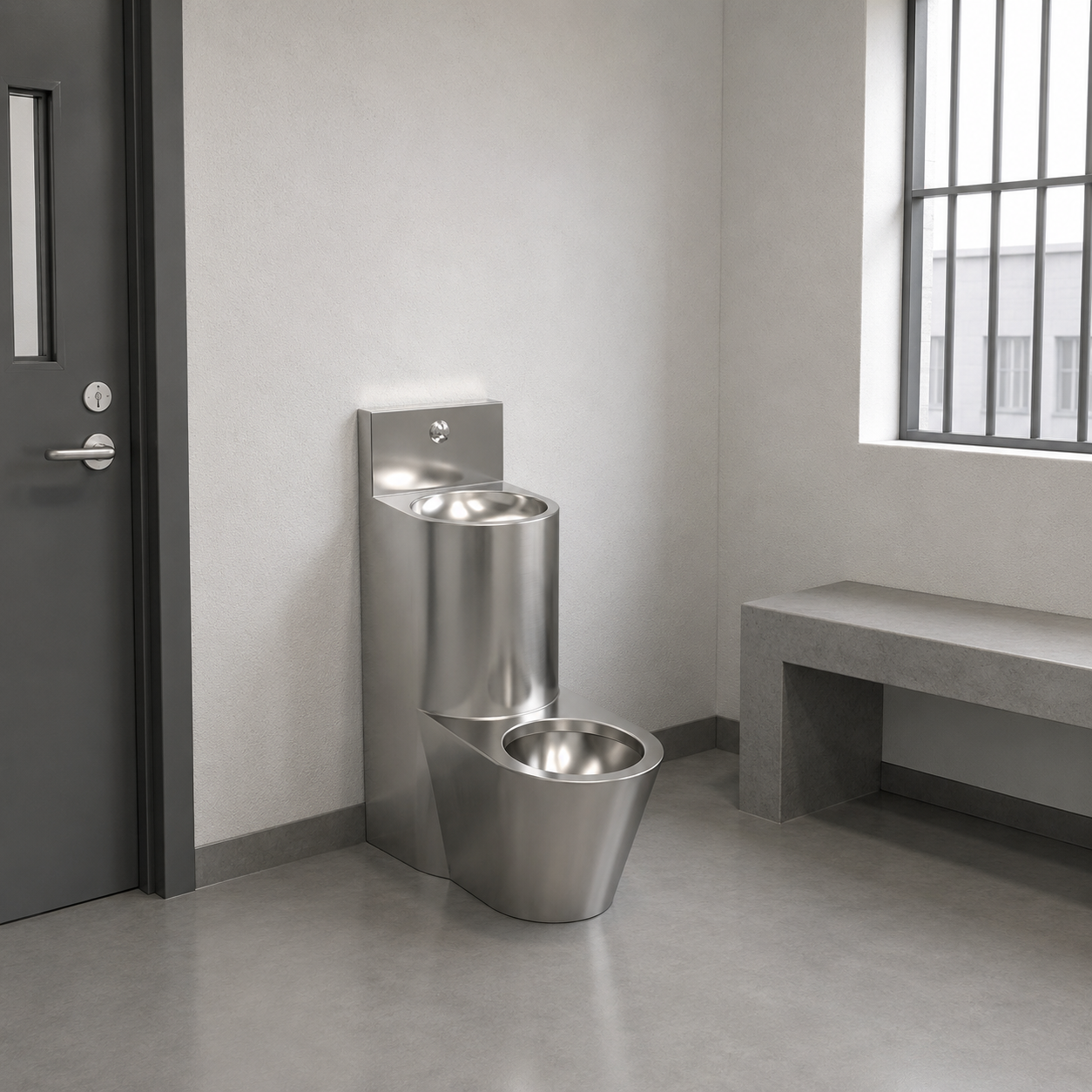
3 Performance Indicators of the Stainless Steel Integrated Sink and Toilet
For the special structure with double independent sewage outlets mentioned in the project bid documents, you need to pay extra attention during the procurement process. You cannot directly apply the acceptance standards for ordinary bathroom products. You must check the key performance indicators item by item based on four core dimensions: material and frame strength, safety of dual water supply and drainage, structural and installation compatibility, and hygiene protection, to ensure the purchased products fit the intended use.
3.1 Material and Overall Frame Strength Indicators
Regarding material and overall frame strength, it is recommended that the main body of the product you purchase be made of 304 food-grade stainless steel, with the overall frame sheet thickness no less than 1.0mm. The sheet thickness in the toilet’s load-bearing areas should be at least 1.5mm to ensure structural stability when people sit or stand. For surface treatment, you should prioritize brushed fingerprint-resistant finishes, which not only reduce fingerprint marks in daily use but also enhance the corrosion resistance of the stainless steel, preventing rust spots even in humid environments. For frame welding areas, you can require the manufacturer to use full weld and polish treatment. All weld points should be ground flush with the surrounding surface, with no bumps or gaps, to prevent dirt accumulation and make daily cleaning and disinfection easier.
3.2 Safety Performance Indicators for Dual Independent Water Supply and Drainage
For the dual independent water supply and drainage safety indicators, the water lines of the two functional units must be completely independent. You need to ensure that the products you purchase are each equipped with independent shut-off valves and flexible hoses, without sharing the same branch pipe, to avoid pressure interference between the lines. The sink’s independent drain must have a stainless steel water seal with a depth of no less than 50mm to effectively block sewer odors; the inner wall of the toilet’s independent drainage channel must be polished, with a roughness not exceeding Ra6.3, to reduce the likelihood of blockage from sticking waste. Additionally, the center distance between the two independent sewage outlets must be greater than 150mm, and the flange thickness should be at least 3mm, ensuring no leaks after connecting to on-site drainage pipes. The drainage capacities of the two channels must also match: the sink’s drainage flow should be no less than 1.0L/s, and the toilet’s flush drainage flow no less than 1.8L/s, avoiding any drainage congestion issues.
3.3 Structure and Installation Compatibility Indicators
For structure and installation compatibility, the products you need to purchase should have an overall length between 800mm and 1000mm. The toilet seat height should be kept between 400mm and 450mm to match ergonomic use for adults. The sink basin depth should be at least 120mm to prevent water splashing during daily use. The toilet waste outlet can be chosen as either bottom or back outlet based on on-site requirements, with standard construction spacings of 305mm or 400mm supported. The sink waste outlet direction can be adjusted according to the site layout, adapting to different water supply and drainage points. The overall product weight should be between 25kg and 40kg, ensuring structural strength while avoiding excessive burden during installation and handling.
3.4 Sanitation and Safety Protection Indicators
For sanitation and safety, all stainless steel parts that come into contact with water must meet national safety standards for metal materials in contact with food, ensuring no harm to users’ health. The toilet seat must be made of antibacterial synthetic material, achieving over 98% antibacterial rate against E. coli and Staphylococcus aureus, preventing cross-infection from frequent contact. All edges and corners of the product must be rounded with at least an R3 radius, eliminating sharp points to prevent bumps and scratches during use. For products used in special monitored areas, you can further opt for fully concealed screw designs to remove any exposed parts that can be easily disassembled, enhancing overall safety.
4 Conclusion
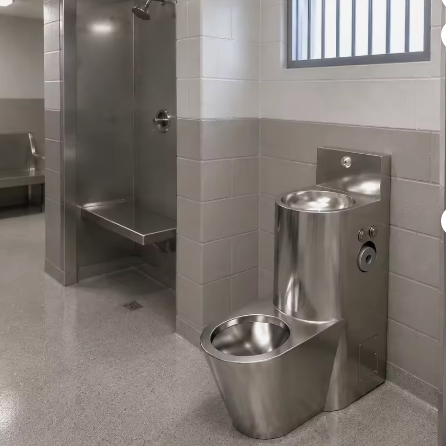
This stainless steel integrated washbasin-toilet with a dual independent sewage outlet structure is a unique category of integrated bathroom products that balances structural safety, hygiene reliability, and scenario adaptability. It not only uses a complete stainless steel framework to achieve a unified layout and easy installation but also relies on fully physically separated dual sewage channels to fundamentally avoid the hygiene risks of cross-contamination in water systems. When making your purchasing decision, you need to move beyond the standard thinking for selecting ordinary bathroom products and focus on the product’s structural features. Combine this with the core needs of your specific usage scenario, and rigorously check key performance indicators such as material strength, water supply and drainage safety, installation adaptability, and hygiene protection. Only then can you select a product that truly fits your scenario needs and ensures low maintenance and high reliability in the long-term use of your project.
Where can you buy a stainless steel integrated washbasin-toilet?
Our company, Bacao Stainless Steel Products Factory, specializes in manufacturing various stainless steel bathroom fixtures. We have served over 30 countries and completed more than 1,000 projects, gaining extensive production and project experience. The toilets we produce all use 304 stainless steel, and our prices are factory-direct with no middlemen. You’re welcome to contact us for inquiries and negotiations.
FAQ
1.Is the all-in-one sink toilet comfortable for everyday use?
The all-in-one sink toilet you need is very comfortable for daily use. From spatial layout and tactile details to everyday operations, it’s optimized to fit human habits, significantly reducing the trivial discomforts of using the bathroom. The edge of the sink is slightly tilted for water flow, allowing droplets to automatically slide into the drain, keeping the countertop dry and water-free, without splashing everywhere. The smooth, stain-resistant glaze is easy to wipe clean, with no hygiene dead corners at all.
After using the toilet, you can wash your hands standing right there without having to go elsewhere, saving your valuable time.
2.How long can a 304 stainless steel all-in-one sink toilet last?
For typical household use, a 304 one-piece product can stay clean and rust-free for up to 30 years without common ceramic issues like chipping or glaze cracking. In high-traffic public areas like scenic spots, factories, or high-speed train stations, with proper basic maintenance, the overall lifespan can exceed 20 years, 5–10 times longer than ordinary ceramic toilets.
3.Is the all-in-one sink toilet easy to clean?
This all-in-one sink toilet is very easy to clean. By integrating the sink and toilet into one unit, there are no seams, extra brackets, or exposed pipes like in traditional separate fixtures. The countertop is smooth and continuous; just a sweep or wipe cleans everything without trapping dust or hair.
The wall-mounted hidden plumbing design eliminates gaps on the floor and walls, so there are no obstacles when mopping, allowing you to clean the entire area in one go.
The surface of the 304 stainless steel has a dense, passivated, stain-resistant layer. Daily splashes can be wiped off with neutral detergent, unlike plastic fixtures that easily scratch or collect grime.
It also features a siphon-style powerful flushing system, creating centrifugal force as the water spins to flush and scrub the inner walls simultaneously. Waste is removed immediately without sticking to the bowl, so you rarely need to brush the inner toilet walls, making it extremely easy to clean.