
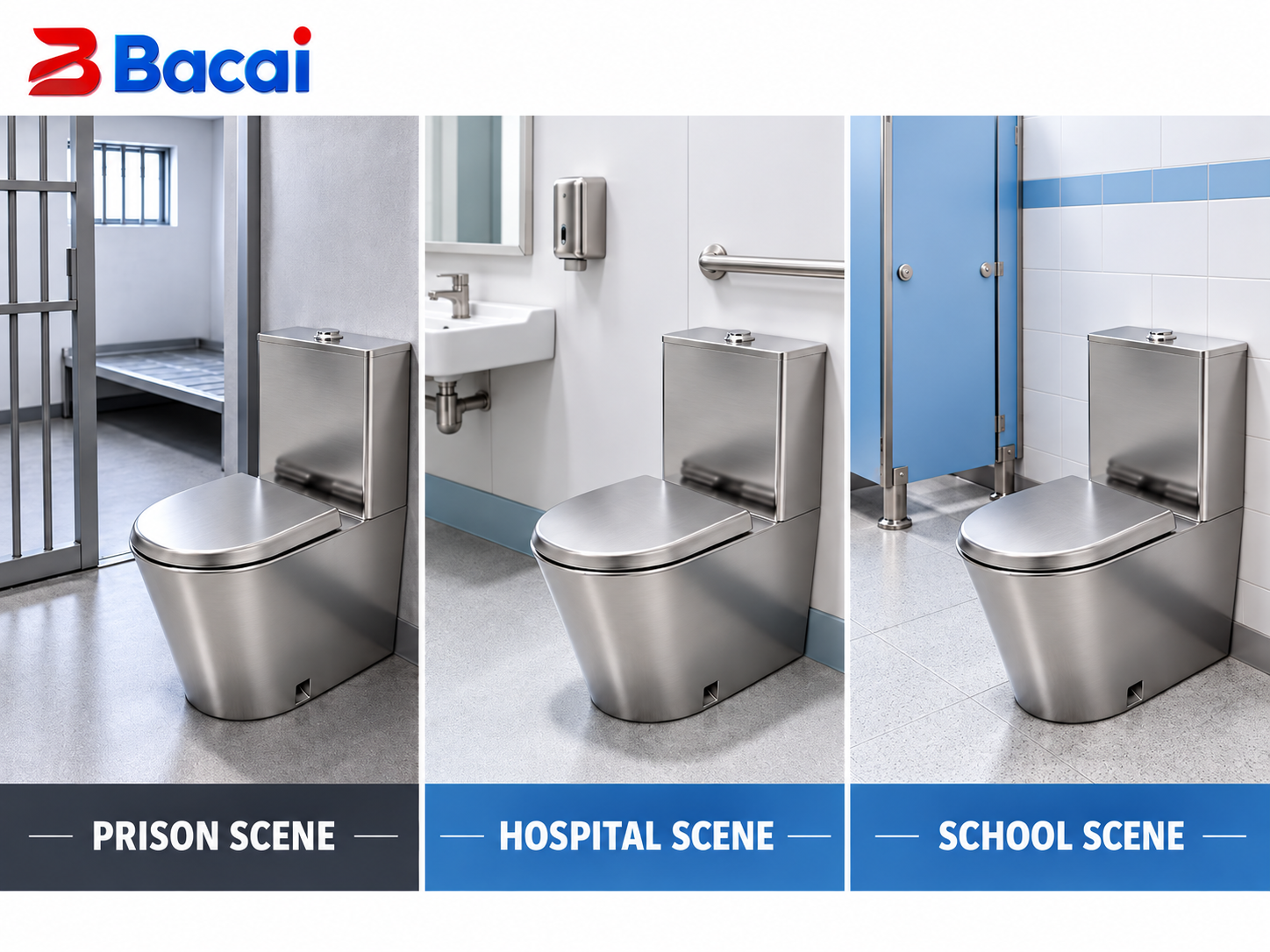
Stainless steel toilets are sanitary fixtures made from stainless steel sheets through processes such as cutting, stamping, and welding. Due to their impact resistance, durability, anti-theft features, corrosion resistance, recyclability, environmental friendliness, and long service life, they are widely used in public restrooms, hospitals, schools, railway stations, docks, prisons, chemical plants, tourist attractions, and other locations with high requirements for durability and hygiene. Compared to traditional ceramic toilets, stainless steel toilets offer inherent advantages in preventing cracking, resisting impacts, deterring theft, and facilitating cleaning and maintenance. In recent years, their application has become increasingly widespread in engineering procurement and specialized settings.
Purchasing stainless steel toilets is not a simple matter of price comparison; it involves multiple stages including material selection, manufacturing processes, functional design, installation compatibility, supplier capability, cost estimation, and delivery inspection. Any oversight in these areas may lead to problems such as rusting, deformation, poor flushing performance, or leakage, affecting normal use and resulting in repeated investments. This article systematically outlines key evaluation factors for purchasing stainless steel toilets by tracing the entire procurement decision process, providing practical guidance for procurement personnel on defining requirements, technical selection, supplier assessment, and acceptance management.
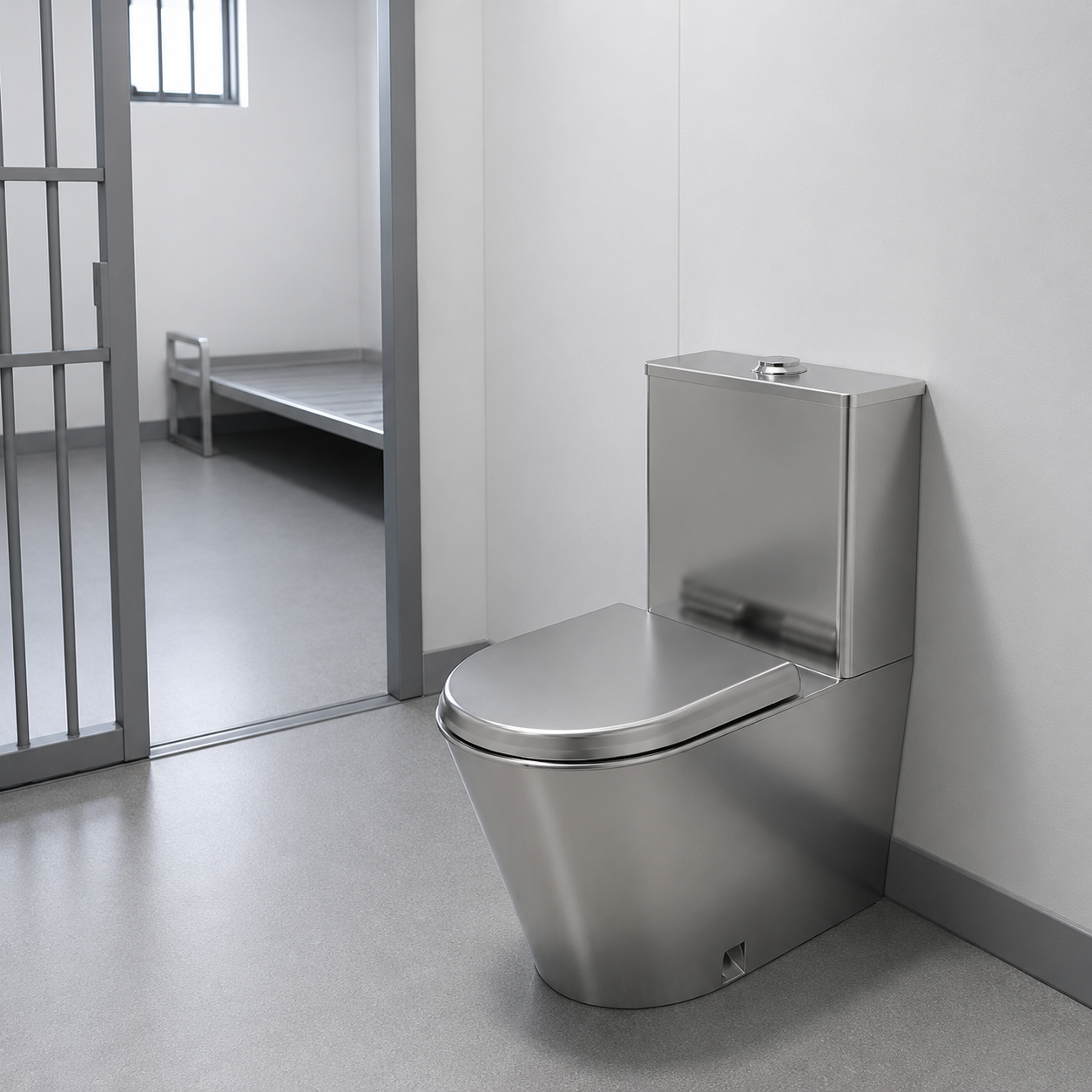
1 Clearly define the application scenario and requirements positioning
1.1 Place of Use and Usage Intensity
The selection of stainless steel toilets primarily depends on the intended usage environment. Usage intensity, hygiene requirements, maintenance conditions, and environmental factors vary significantly across different settings. For instance, hospitals and food processing facilities demand higher standards for hygiene and antibacterial properties, while water-related environments may expose the fixtures to corrosive agents such as disinfectants. In coastal areas, where air contains high salt levels, the presence of chloride ions necessitates greater corrosion resistance in stainless steel. Special locations like prisons and detention centers place greater emphasis on impact resistance, anti-tampering features, and durability against vandalism. High-traffic areas such as train stations and tourist attractions prioritize reliable flushing performance, smooth drainage, and ease of cleaning. As a purchaser, you should clearly define the installation site, average daily usage frequency, maintenance conditions, and whether the fixtures will be exposed to acidic, alkaline, or saline substances—these factors should serve as the primary basis for selecting appropriate materials and structural designs.
1.2 Procurement Requirements List
After clearly defining the site requirements, a quantified procurement needs list should be established, including: product quantity and specifications, flushing method (direct flush or siphon), drainage method and pit distance, whether squat toilets or seated toilets are required, whether water tanks and flushing mechanisms are included, whether antibacterial coatings or special surface treatments are needed, accessory components (lid, floor feet, mounting hardware), as well as installation and after-sales service requirements. The more detailed the needs list, the better it will support subsequent technical selection, supplier quotation comparison, and on-site delivery inspection, helping to avoid procurement discrepancies caused by focusing solely on price without considering configuration.
2 Verification of Material and Quality Standards
2.1 Material Differences Between 304 and 316 Stainless Steel
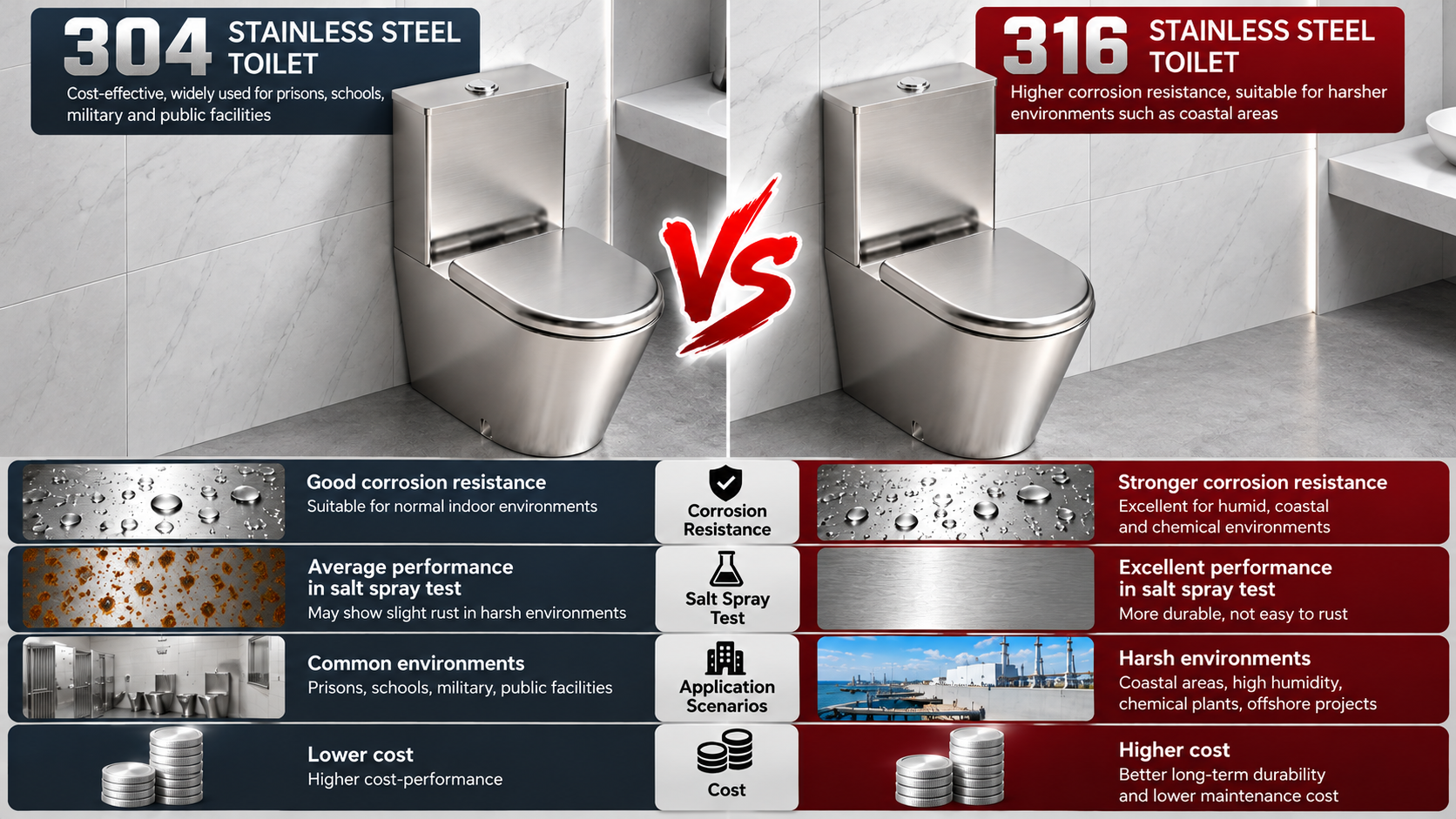
Material is the foundation of stainless steel toilet quality and also the most disputed point during purchasing. 304 stainless steel is an 18-8 austenitic stainless steel, with about 18% chromium and 8% nickel, offering good corrosion resistance, easy forming and welding, and wide availability. It is the mainstream material for general sanitary ware. 316 stainless steel adds 2% to 3% molybdenum on the basis of 304, significantly improving resistance to pitting and crevice corrosion in chloride environments. Its corrosion resistance equivalence (PREN) is about 23 to 28.5, higher than 304’s 18 to 20, making it better suited for coastal high-salt areas, chemical environments, or places frequently exposed to chlorine-based disinfectants. When purchasing, you should choose between the two based on your usage environment: for general indoor sanitary locations, 304 is sufficient, while coastal, humid, or high-chlorine environments are better with 316 or 316L if budget allows, offering longer service life and lower maintenance costs. Choosing 304 won’t affect the user experience, so the final decision should be based on your actual needs.
2.2 Plate Thickness and Forming Method
The strength and durability of stainless steel toilets are directly related to the thickness of the material. Plates that are too thin can lead to issues like deformation, collapsing under pressure, and weld cracking. When purchasing, you should clearly specify your thickness requirements (usually covering the main wall thickness and graded requirements for load-bearing parts) and ask the supplier to provide documentation showing the thickness and evidence that it can be actually measured. As for forming methods, products that are integrally formed or made by bending a whole plate have better structural integrity, fewer welds, and lower risk of leakage; for welded products, pay special attention to weld quality.
2.3 Material Authenticity Testing
There are cases in the market where low-nickel stainless iron is passed off as 304 stainless steel. You can verify the material in various ways during purchase and acceptance: check if the product has SUS304 or other steel stamps; use stainless steel testing solutions or spectrometers for on-site spot checks; request the supplier to provide a material certificate with the shipment, and if necessary, send samples to a third-party lab to verify the chemical composition. Cross-checking in multiple ways can effectively prevent substandard materials from being used.
2.4 Strict Control of Low-Nickel Stainless Iron
Industry group standards clearly state that when selecting stainless steel for home and sanitary equipment, austenitic stainless steel with no less than 06Cr19Ni10 (S30408) should be used, and low-nickel stainless steels like 201, 202, and 301 are strictly prohibited. These low-nickel materials have lower nickel content, poor corrosion resistance, rust easily, discolor in humid environments, and may release harmful substances, which do not meet safety standards for sanitary equipment.
3 Manufacturing Process and Surface Treatment
3.1 Welding Process
For stainless steel toilets with welded structures, the quality of the weld directly affects the lifespan. Full welds should be used, with proper sealing and grinding on the inside to avoid cracking or leakage caused by spot welding or incomplete welds. Upon delivery, you can visually check if the welds are continuous, full, and free of pores or slag, and if necessary, perform a water flow or leak test for verification.
3.2 Surface Treatment and Cleaning
Common stainless steel surface treatments include brushing, mirror polishing, and buffing. Brushed surfaces resist scratches and show fewer fingerprints, making them suitable for high-traffic public places, while mirror finishes look shiny and attractive but easily show fingerprints and water marks. The surface treatment should be even, without obvious scratches, dents, or oxidation color differences. A good surface affects both appearance and ease of cleaning, as well as microbial attachment, so surface requirements should be clarified during procurement and included in acceptance checks.
4 Structure and Functional Design
4.1 Flushing Method
Flushing methods are mainly divided into direct flush and siphon flush. Direct flush has thick pipes, strong flushing power, is less prone to blockage, has a simple structure, and is relatively inexpensive, but it’s noisier and the odor prevention is average. It’s suitable for places with low noise requirements and ordinary sewage conditions. Siphon flush uses the siphon principle, producing low flushing noise, saving water, preventing odors effectively, and providing a high water seal. It’s the mainstream choice for comfort-focused locations, though it demands higher manufacturing precision. Stainless steel toilets can choose the flushing structure according to the usage scenario.
4.2 Cistern, Flushing System, and Water Efficiency Rating
The cistern and flushing system are key components affecting water usage and flushing performance. U.S. federal regulations set a maximum base water usage for toilets of 1.6 gallons per flush (about 6.06L). EPA WaterSense certification is a voluntary high-efficiency water-saving label, requiring ≤1.28 gallons per flush (about 4.84L), while also assessing flushing performance. The EU uses standards EN 997 for toilet products and EN 14055 for cisterns. Australia follows the AS 1172 series for toilet and cistern components. China’s water efficiency grading is similar to the ISO 31600 water efficiency labeling concept, aligning with the logic, water usage limits, and flushing performance checks of mainstream systems in Europe, the U.S., and Australia, while considering specific domestic and international conditions for flush discharge and trap reliability. As a purchaser, you should prioritize products with high water efficiency (low water usage) and good flushing performance, balancing water saving with flushing ability, and confirm whether the product has the proper water efficiency labeling.
4.3 Waste Disposal, Trap Distance, and Water Seal
Waste disposal method and trap distance are key parameters for installation compatibility. Trap distance refers to the horizontal distance from the center of the waste pipe to the wall, commonly 300mm or 400mm. You must measure it in advance; otherwise, the toilet may not fit or leave excessive gaps. Also, pay attention to the trap and water seal design: the water seal depth and the minimum diameter of the trap must meet relevant sanitary ware standards (refer to GB/T 6952 “Sanitary Ceramics” for toilet water seal and flushing function requirements) to ensure odor prevention, backflow prevention, and smooth drainage. The bottom outlet should ideally be a single port design for easy alignment with the drainage pipe.
4.4 Antibacterial and Hygiene Performance
Public and medical spaces have high hygiene requirements, so you can choose stainless steel toilets with antibacterial treatments or easy-to-clean structural designs. Smooth, seamless, and easy-to-flush surfaces reduce dirt and microbial buildup. For scenarios involving drinking water or food contact, you should also confirm that the material is safe for contact and does not release harmful substances.
5 Size and Installation Compatibility
5.1 Measuring Pit Distance and Checking Dimensions
Before placing an order, the pit distance, water supply and drainage connection positions, and space dimensions at the installation site should be measured in practice. These measurements should then be used to check whether the actual size of the product matches the reserved space. Dimension checks involve not only the waste outlet but also the toilet’s width, height, and installation clearance to avoid issues with installation or affecting movement and use after delivery.
5.2 Installation Method and Pipe Compatibility
Stainless steel toilets can be installed as floor-mounted or wall-mounted. Floor-mounted installations are simple and reliable for bearing weight, making them suitable for most places. Wall-mounted toilets make floor cleaning easier, but require higher wall strength and installation skills. It’s also important to confirm that the water inlet pipe specification, angle valve position, and drainage pipe diameter match. Ensure all accessories like fasteners, brackets, and gaskets are complete to prevent installation compatibility issues from the start.
6 Durability, Safety, and Environmental Protection
6.1 Load-Bearing, Rust-Resistance, and Corrosion Resistance
Stainless steel toilets should handle normal use and stepping loads without deformation or collapse, especially in public places with high traffic and frequent use, where the strength of the main structure and load-bearing parts must be guaranteed. Products with proper material selection, reliable welding, and well-treated surfaces can resist rust and corrosion long-term under normal conditions, significantly extending service life and reducing replacement and maintenance frequency.
6.2 Hygiene, Safety, and Environmental Protection
Stainless steel is hygienic, safe, does not chip like glazed surfaces, and does not release harmful substances, meeting safety standards for sanitary ware. At the same time, stainless steel is recyclable and has a high reuse rate. Paired with water-saving flush systems, it performs better than traditional ceramic products in water conservation and environmental friendliness, aligning with green procurement and sustainable use goals.
7 Supplier and Brand Evaluation
7.1 Qualifications and Testing Capability
Suppliers should have legal production or distribution qualifications and be able to provide product certificates, type inspection reports, material certificates, and test data that meet current national standards. It’s necessary to verify whether their products have been tested according to standards like GB 25502 and GB/T 6952, and whether they have quality system certification. Suppliers with complete qualifications and reliable testing capabilities are more likely to offer products with higher pass rates and stability.
7.2 Production Experience and Warranty/After-sales Service
You should look into the supplier’s experience in stainless steel sanitary ware, cases of similar projects, and market reputation. It’s also important to clarify warranty periods, after-sales response, spare parts supply, and repair service agreements. Consider after-sales service ability as a key selection factor to avoid one-time procurement issues without follow-up support.
8 Cost and Lifecycle Cost-effectiveness
8.1 Purchase Cost and Maintenance Cost
The initial purchase price of stainless steel toilets is usually higher than that of ceramic toilets, but they are impact-resistant, shatterproof, long-lasting, and low-maintenance, making their total lifecycle cost often more advantageous in public or special-use settings. Purchase decisions should consider the full lifecycle costs, including initial purchase, installation, daily maintenance, repairs, and replacement cycle, rather than just comparing unit prices.
8.2 Cost-effectiveness Compared to Ceramic Toilets
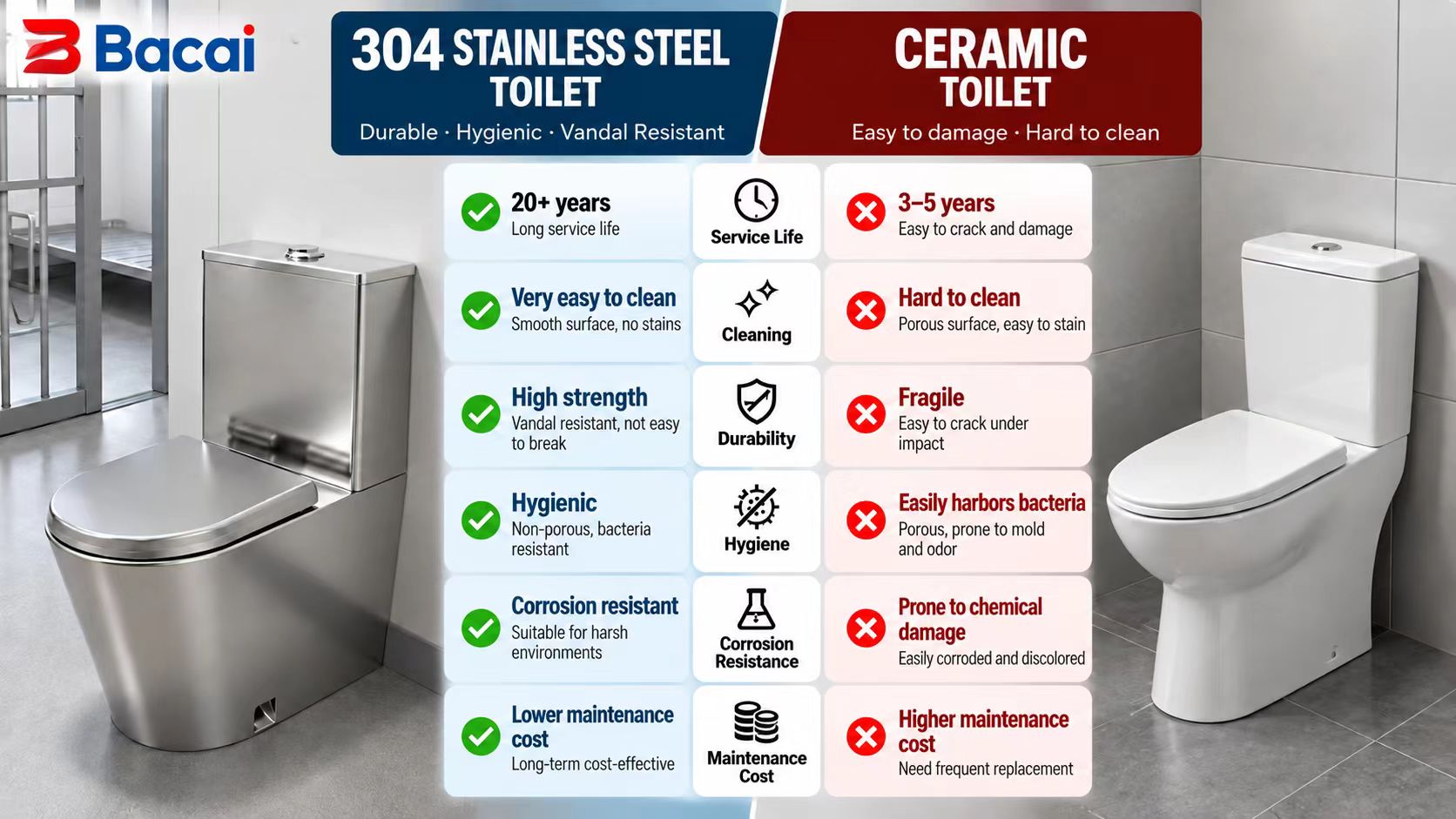
In scenarios requiring crack resistance, tamper-resistance, impact resistance, and easy cleaning, stainless steel toilets clearly have durability advantages. However, for regular household use where aesthetics and comfort matter and cost is a concern, ceramic toilets might be more suitable. As the buyer, you should weigh the cost-effectiveness between stainless steel and ceramic based on the actual use scenario and budget, rather than blindly chasing high prices or opting for the cheapest option.
9 Procurement Process and Acceptance Standards
9.1 Contract Technical Terms
The procurement contract should clearly specify product specifications and models, material grades, sheet thickness, surface treatments, flushing methods, water efficiency class, dimensions and hole spacing, accessory lists, applicable standards, inspection requirements, delivery schedules, warranty, and liability for breach. Key technical requirements should be documented in writing as a reference for production, inspection, and acceptance to prevent disputes later on.
9.2 Key Points for Arrival Inspection
Arrival inspection is a crucial step to ensure procurement quality. Each item should be checked: the appearance should be free of obvious scratches, dents, color differences, or deformation; the material stamps should match the accompanying warranty certificate and be verifiable; welds should be continuous and full, with no weak spots; flush buttons should respond accurately, water should flow smoothly without unusual sounds, and no residue should remain inside after flushing; drainage should be normal, with no standing water or odor; dimensions and hole spacing should match the site; and all accessories should be complete. Any problems should be documented and handled according to the contract, and payment can only be settled after acceptance.
10 Conclusion
Purchasing stainless steel toilets involves multiple steps and standards, and its core can be summarized as defining needs based on scenarios, setting the baseline with standards, ensuring quality through craftsmanship, and controlling acceptance. Buyers should start with usage scenarios and requirements, use current national standards and industry norms as the technical baseline, focus on material, processes, and functions for quality, consider supplier evaluation and total lifecycle costs for decision-making, and rely on arrival inspection as the final safeguard. Only in this way can you select stainless steel toilets that are reliable, durable, safe, and cost-effective, truly meeting usage needs and achieving long-term benefits.
FAQS
Why are stainless steel toilets more expensive?
The high price of stainless steel toilets mainly comes from the following reasons:
1.Raw material costs
Ceramic toilets use materials like clay, feldspar, and quartz, costing a few hundred yuan per ton. Stainless steel toilets use nickel-chromium alloy steel (304 contains 8% nickel), and nickel prices fluctuate a lot, with the cost per ton being dozens of times that of clay. This alone drives up the cost.
2.More labor-intensive manufacturing process
Ceramics: mold casting → firing (around 1250°C) → glazing, a mature process suitable for mass production.
Stainless steel: requires cutting, stamping, welding, grinding and polishing, and rounding corners. Welding and polishing are manual or semi-manual, requiring a lot of labor, with high scrap rates and labor costs.
3.Small production, no economies of scale
Ceramic toilets are consumer goods, with tens of millions produced annually, spreading mold and production line costs thinly. Stainless steel toilets are mainly for commercial/engineering needs (public toilets, prisons, hospitals, high-speed trains, ships), with a small market and scattered orders, so the mold, certification, and tooling costs per unit are much higher.
4.Paying for material durability
Ceramics can chip easily and crack in the cold; stainless steel is impact-resistant, corrosion-resistant, lasts up to 30 years, and is easy to clean and disinfect. Places like prisons, ships, and food hygiene scenarios have strict requirements for vandalism resistance and hygiene, so these specialized models must use thick plates and 316 stainless steel, naturally making them more expensive.
How long does a stainless steel toilet last?
A high-quality 304 stainless steel squat toilet bowl can have a designed lifespan of up to 30 years in regular indoor public restrooms with proper maintenance. In coastal areas with high salt mist or in places where chlorine disinfectants are frequently used, the lifespan drops to 10-15 years, so it’s recommended to use 316L material for better corrosion resistance. The flushing system’s tank parts and rubber seals are consumables, with a lifespan of 5-8 years, and need regular inspection and replacement.