
In homes, we primarily use ceramic toilets. However, in industrial settings and high-traffic areas, ceramic toilets are less common. Ceramic is fragile, has a short lifespan, and cannot withstand harsh environments and frequent use.
In these situations, metal toilets are more suitable. Metal toilets are more robust and durable, less prone to staining, resistant to damage, have a longer lifespan, do not require frequent replacement, and are easier to maintain. For project procurement, this makes them the optimal choice.
Today we’ll learn everything about metal toilets, including types, suitable scenarios, and performance metrics, to help you make the best purchasing decisions.
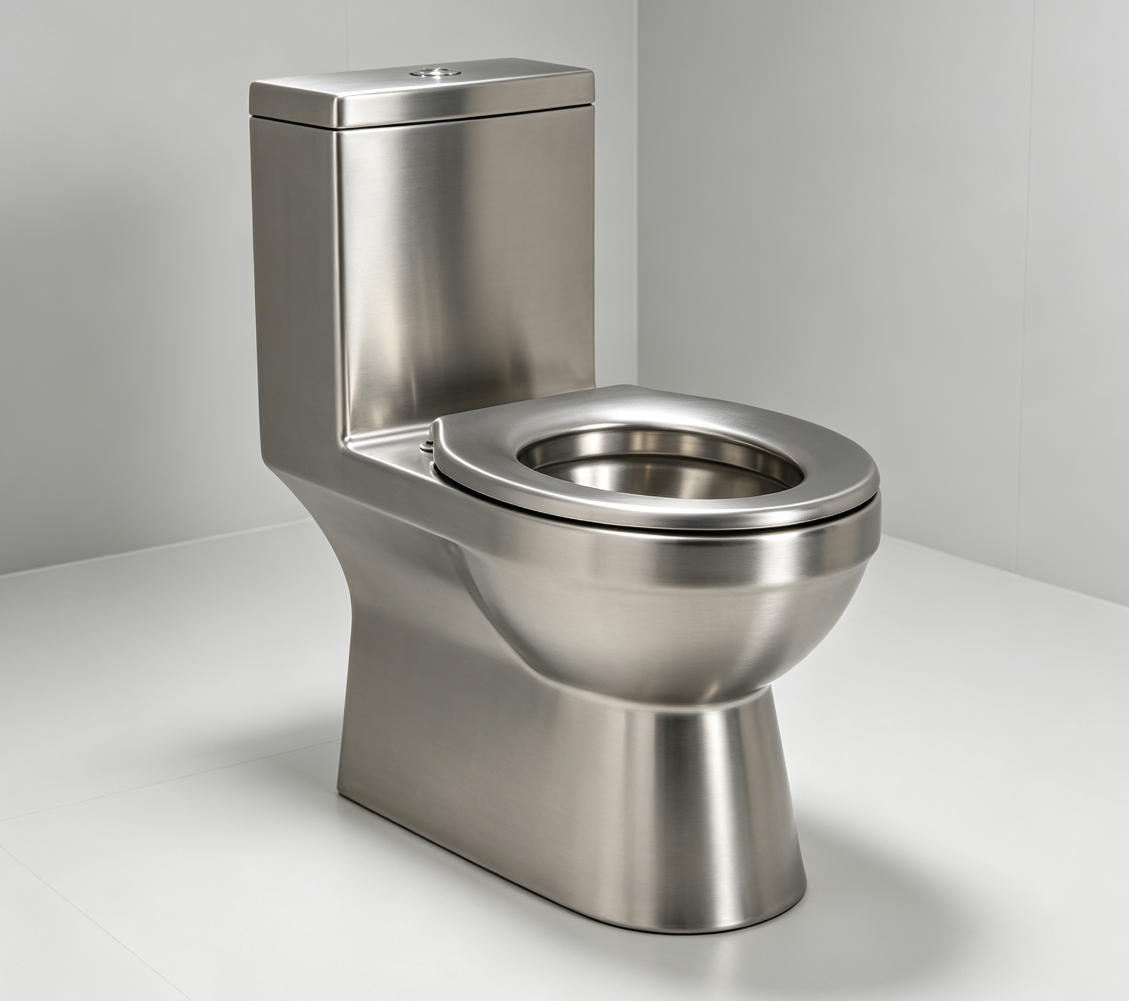
What is a Metal Toilet?
Metal toilets are designed for extreme scenarios. Made of metal materials such as stainless steel and steel, they are primarily used in special locations such as high-speed trains, airplanes, ships, prisons, and mental hospitals.
The main characteristic of metal toilets is their sturdiness and durability. Unlike household ceramic toilets, they are less prone to cracking and can last for over 10 years.
Why are Stainless Steel Toilets the Most Popular among Metal Toilets?
Among various metal materials, stainless steel is the most commonly used because it offers the best cost-performance ratio, mainly due to the following aspects:
1. Sturdy and Durable:
Unlike brittle ceramic toilets, stainless steel can withstand impacts without deformation or cracking. It also has strong load-bearing capacity; a person standing on it will not cause deformation.
2. Vandal-Resistant:
Stainless steel toilets are made through a one-piece stretching process, with no gaps or joints, reducing the likelihood of forced damage.
3. Easy to Clean:
Stainless steel itself is antibacterial and corrosion-resistant, making it difficult for bacteria to survive on its surface, unlike ceramic, which easily breeds bacteria and stains.
4. Long service life:
Stainless steel toilets can typically last for more than 10 years and can remain as good as new with proper maintenance.
What are the Types of Metal Toilets?
Metal toilets come in many styles and can be broadly categorized by installation method, flushing method, and drainage method.
According to Installation Method:
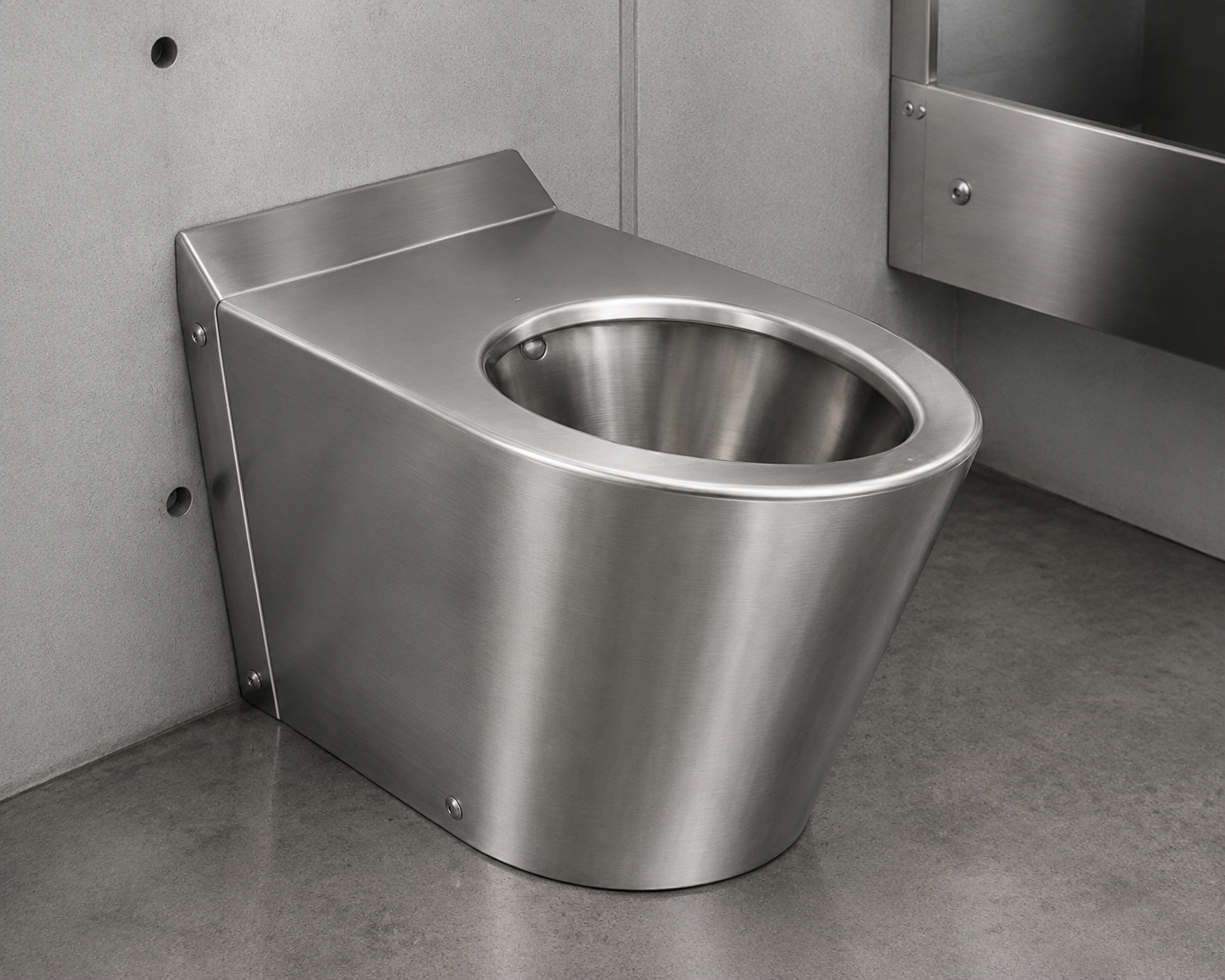
Wall-mounted:
The toilet is mounted on the wall, suspended from the ground. Wall-mounted toilets are small and don’t take up much space, typically used in space-constrained environments like airplanes, ships, and high-speed trains.
Floor-mounted:
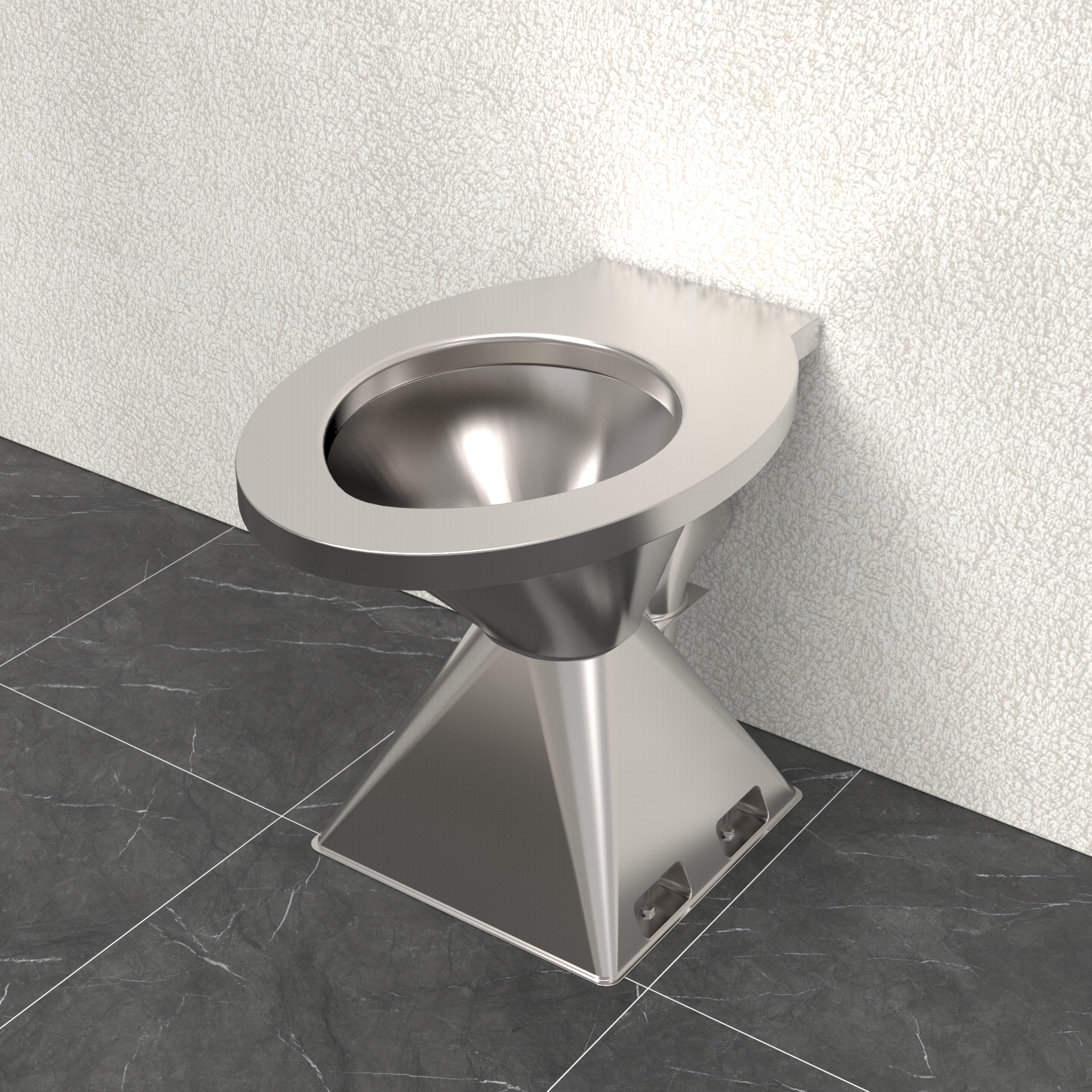
The toilet is mounted on the floor, secured with screws. Floor-mounted toilets are more secure than wall-mounted ones, and are the most common type.
One-piece:
This combines the toilet and sink, eliminating the need for a separate sink and saving space. It allows for immediate handwashing after using the toilet, offering convenience and hygiene, but it’s significantly more expensive than the previous two types.
According to Flushing Method:
Direct flush:
Uses water flow to flush away wastewater; it has a strong flush but is noisy.
Siphon flush:
Uses a siphon effect created by the pipes, combined with flushing, to suck away wastewater; it’s quieter and has better odor control.
According to the Drainage Method:
wall drainage and floor drainage are determined by the layout of the pipes on site. In pl
aces like ships, airplanes, and high-speed trains, the pipes are generally inside the walls, which is wall drainage; in places like factories, prisons, and public toilets, the pipes are normally laid out, which is generally floor drainage.
What are the Best Application Scenarios for Metal Toilets?
Metal toilets have a wide range of applications and can be roughly divided into the following four categories.
1. Correctional institutions such as prisons and detention centers:
Correctional institutions are the most special places in society, with potential risks of violence. Equipment in these institutions is usually made of metal, especially bathroom facilities that inmates come into contact with most frequently. Metal is vandal-resistant and offers higher security than toilets made of other materials.
2. Airplanes, high-speed trains, and ships:
Toilets in transportation vehicles need to withstand long-term bumps and frequent use. Conventional ceramic toilets are heavy and cannot meet this intensity of use; only metal toilets can.
3. Hospitals and mental hospitals:
Hospitals typically have high traffic volu
mes and frequent toilet use, so durability and hygiene are paramount. Metal toilets are far more durable than toilets made of other materials, and they are also more hygienic, less prone to bacterial contamination. With proper maintenance, they can remain like new for many years.
4. Military Facilities:
Military facilities are typically classified and do not require frequent replacements, so lifespan is a primary consideration. Metal toilets have the longest service life, reaching 10 or even 20 years, making them the first choice for military toilets.
Six Standards to Check Before Purchasing:
There are 6 things you must confirm before purchasing, otherwise it will be too late if you receive the goods and find that they are unusable.
1. Seamless One-Piece Molding:
Metal toilets with too many seams are easily damaged, and gaps can lead to leaks. One-piece molding toilets are aesthetically pleasing, sturdy, and less prone to damage, with fewer gaps preventing bacterial growth.
2. Steel Plate Thickness:
The steel plate thickness used in metal toilets should be at least 1.2mm. For load-bearing parts such as the seat and base, it can even reach 2.5mm, allowing for stable foot support.
3. Surface Treatment:
Metal toilets must undergo surface treatment, generally either brushed or polished. Brushed finish creates a textured surface that resists scratches; polished finish makes the toilet surface bright and easy to clean and maintain.
4. Complete Accessories:
Before purchasing, always confirm whether matching pipes, tanks, valves, screws, etc., are included. Otherwise, you may receive the goods missing accessories, which can be difficult to find if they are not standard.
How to Choose a Metal Toilet Manufacturer?
Choosing a reliable manufacturer by following these criteria will never be a mistake.
1. Production Experience:
Production experience is a key indicator of a manufacturer’s capabilities. A new factory may produce substandard quality products, have limited product range, and be unable to guarantee delivery times, all of which will affect the completion of your project.
2. Customization Ability:
Established manufacturers can provide customization services, including toilet dimensions, appearance details, water inlet and drainage modifications, flushing systems, logo styles, etc., to meet the needs of different projects.
3. Engineering Experience:
Practical engineering experience is proof of a manufacturer’s strength. Experience with projects in different countries around the world allows manufacturers to understand local customs and requirements better than the buyer, enabling them to meet project acceptance standards more smoothly.
4. After-Sales Support:
Professional manufacturers provide after-sales installation guidance and support services. Receiving the goods does not mean the project is complete; on-site installation is the final step. The manufacturer should be able to provide support and returns/exchanges for any problems that arise during installation and use.
FAQ:
1. Are metal toilets comfortable for daily use?
Metal toilets are ergonomically designed with ideal height and width, providing a comfortable sitting posture. The only drawback is that they might feel a bit cold.
2. Are metal toilets more expensive than ceramic toilets?
Metal toilets are more expensive than ceramic toilets due to the higher cost of materials and more complex manufacturing processes. However, metal toilets have a much longer lifespan and don’t require frequent replacements. In the long run, the overall cost is not higher than that of ceramic toilets.
3. Are metal toilets easy to clean?
Metal toilets are easy to clean. Generally, just use water and a cloth to wipe them. Regular disinfection is also possible. If rust stains appear, they can be removed by wiping with white vinegar or baking soda. Do not use brushes or sharp objects such as steel wool.
4. How much do stainless steel toilets cost?
Wall-hung toilets: $150-$250
Floor-mounted toilets: $190-$300
One-piece combination toilets: $290-$500
Where can I Buy Stainless Steel Toilets?
BaCai Stainless Steel Products Factory is a manufacturer specializing in stainless steel toilets. Located in Suzhou, Jiangsu Province, China, we have over ten years of production experience. All our toilets are made of 304 stainless steel. Our factory has 5 production lines and over 100 employees, possessing rich production and engineering experience. We have served over 200 projects, and our toilets are sold to over 100 countries. We provide comprehensive pre-sales, sales, and after-sales support to ensure the smooth completion of your projects.