
When sourcing prison toilets for a project, you may notice that while they appear ordinary, market prices range from $200 to $2,000. Why is there such a significant price disparity? How can you, as a purchaser, select the right toilet? This article breaks down the factors influencing prison toilet prices to help you make the best choice.
Key Factors Influencing The Price of Prison Toilets
Ⅰ. Materials And Craftsmanship:
Materials such as 201, 304, and 316 stainless steel vary in price, leading to significant differences in the final product cost.
1. 201 stainless steel is much cheaper than the 304 and 316 grades. Although it is a type of stainless steel, it is relatively soft, prone to deformation, and susceptible to rusting in humid environments.
In contrast, 304 and 316 stainless steels offer high strength and superior resistance to corrosion and acids, making the raw material significantly more expensive than the 201 grade.
2. Surface finishes—such as baked enamel coatings (which allow for custom colors and enhanced visual appeal) or matte brushed textures (which resist scratches and offer a bright, attractive look)—add extra processing steps and increase costs. Consequently, these products are priced higher than standard stainless steel toilets with a natural finish.
II. Security Level
Different security levels for prison toilets necessitate specific design requirements—such as resistance to escape, self-harm, and vandalism—with each additional feature driving up costs.
1. Vandal-Resistant Design
While standard residential stainless steel toilets typically use material 0.6–0.8 mm thick, prison toilets must account for the risk of vandalism. Consequently, the stainless steel used is usually at least 1.2 mm thick, with load-bearing areas like the base and seat reaching 2.5 mm. This thicker material results in higher production costs and a higher final price.
2. Tamper-Resistant Design
Tamper-resistant toilets feature a fully enclosed, seamless structure to prevent them from being pried apart and used as weapons. Installation relies entirely on concealed fasteners—hidden inside the toilet unit or within the wall—ensuring inmates cannot access or dismantle them.
This seamless, integrated design requires specialized molds that cannot be used on standard production lines; the need for custom tooling increases manufacturing costs.
3. Suicide-Prevention Design
All interior and exterior edges of the toilet are rounded and smoothed, eliminating right angles or sharp points that could cause accidental injury or be used to sharpen metal for self-harm. The design excludes handles, latches, or external brackets, ensuring there are no anchor points where ropes or fabric strips could be tied, thereby preventing hanging. The meticulous polishing and repeated grinding of all edges and corners significantly increase labor hours, raising the product’s labor costs.
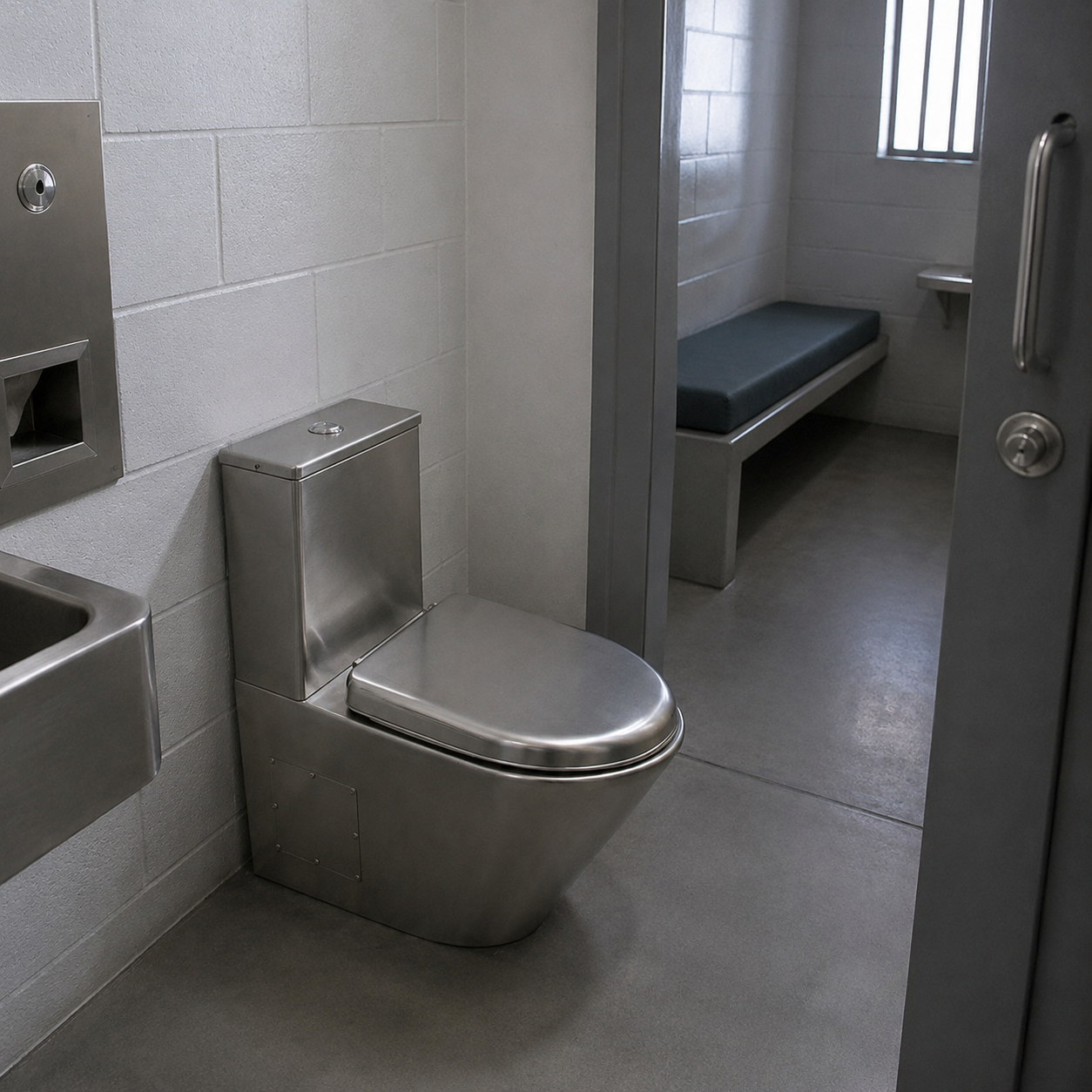
III. Installation Method
Prison toilets are categorized by installation method into floor-mounted, wall-mounted, and combined units. Different installation methods entail distinct internal structures and layouts for water inlets and outlets; furthermore, significant variations in material and labor costs result in substantial differences in selling prices.
Wall-mounted:
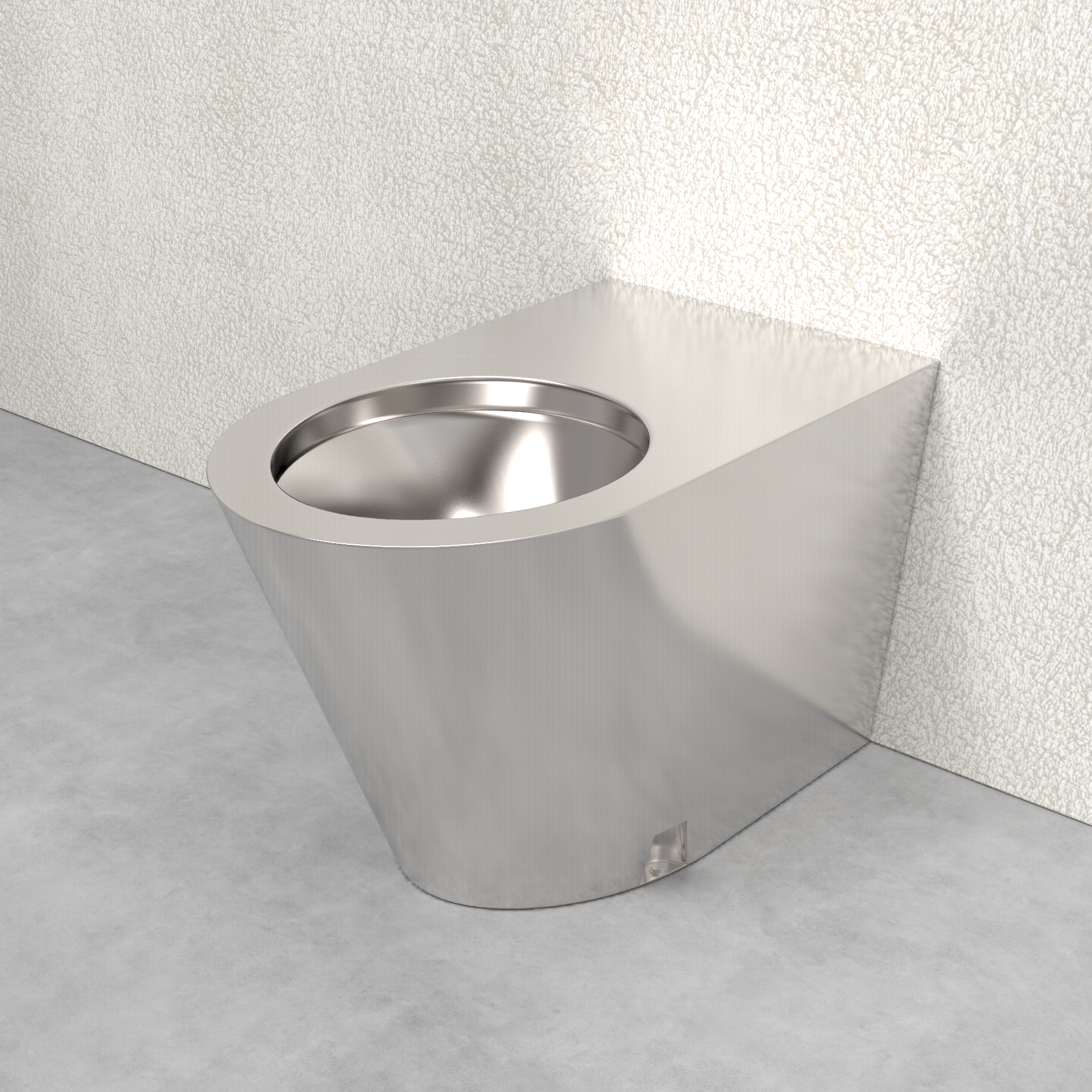
These lack floor supports and are secured to the wall via multiple rear bolts, sitting flush against the surface with no gaps at the back. The suspended design eliminates hard-to-clean areas at the base, prevents the concealment of contraband, and facilitates hygiene maintenance. As they do not require a pedestal base, they use less material and are relatively lower in price.
However, installation is complex, requiring specific wall load-bearing capabilities and high construction precision, which increases installation costs.
Floor-mounted:
These feature an integrated vertical support base that rests directly on the floor, with the waste pipe connecting through the floor; the base and bowl are typically welded into a single unit. They are anchored directly to the floor—requiring only a connection between the outlet and the floor pipe—making installation simple and inexpensive.
Due to the inclusion of the base and shroud, material usage is significantly higher than that of wall-mounted models, resulting in a higher price point.
Combined units:
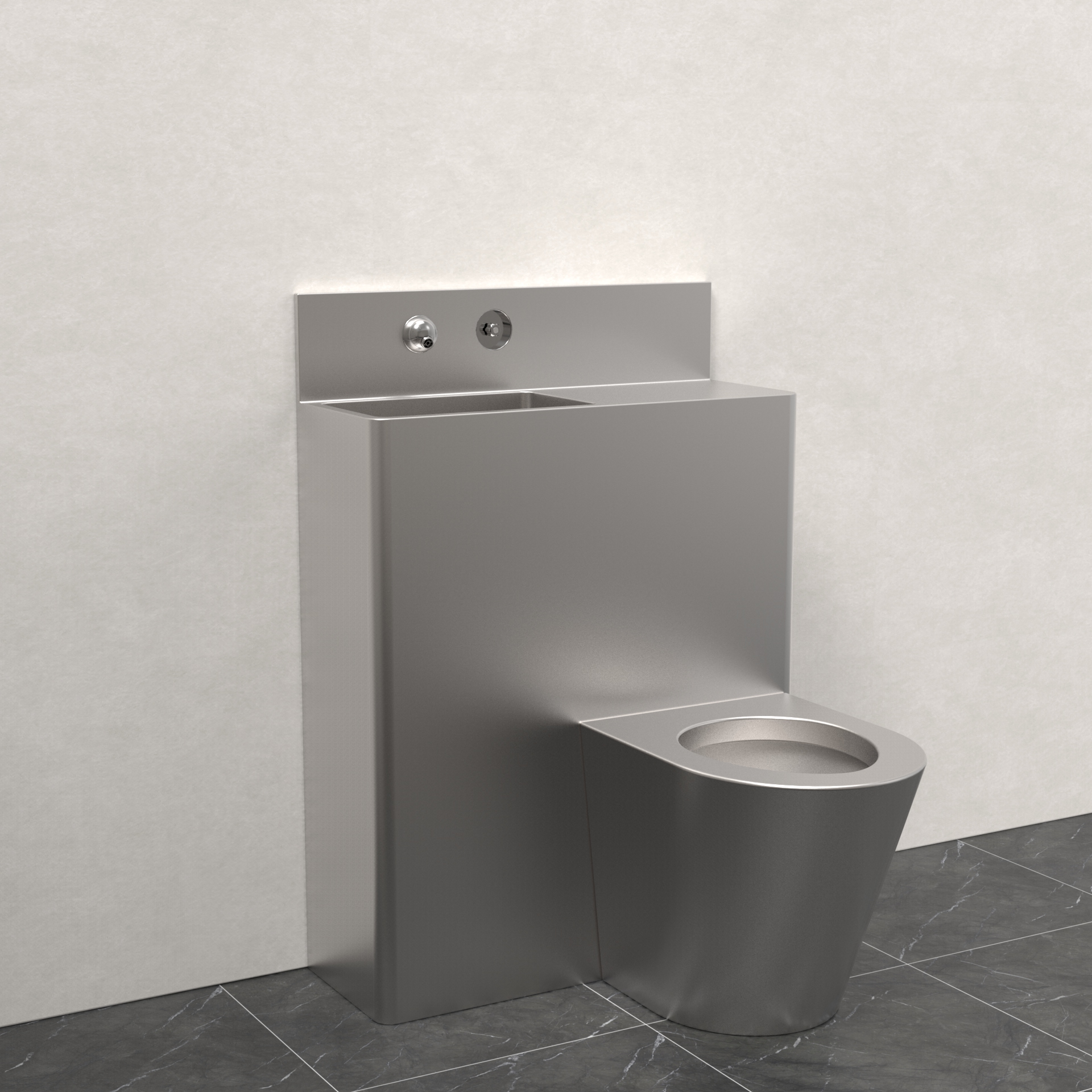
In addition to wall-mounted and floor-mounted models, there are combined units that integrate the toilet, washbasin, soap dish, and tissue holder into a single assembly, maximizing both vandal resistance and space efficiency.
Naturally, these are the most expensive option; the costs for mold-making and stamping are doubled, material consumption far exceeds that of a standalone toilet, and the associated labor costs for production and quality inspection are substantially higher.
Hidden Costs Often Overlooked by Buyers:
To save money, many purchasers opt for 201-grade stainless steel toilets with a thickness of 0.6–0.8mm. However, in the relatively humid environment of a prison, 201-grade stainless steel is prone to rusting through, denting, and deforming upon impact within just 1–2 years. This necessitates premature replacement, incurring repeated costs for procurement, removal, and installation; the cumulative long-term expenditure far exceeds the initial cost of purchasing higher-quality, compliant products.
We therefore recommend purchasing standard, heavy-duty, one-piece toilets made of 304 or 316-grade stainless steel. These offer a reliable service life of at least 8–10 years and entail minimal hidden costs for replacement and maintenance.
Some purchasers also buy toilets featuring sharp corners or detachable parts. Such toilets can easily be modified by inmates into sharp metal weapons. Should a violent incident occur—such as self-harm or an assault on others—the purchasing entity faces liability, including medical compensation, administrative penalties, and accountability for project rectification. These represent significant hidden costs incurred later in the project lifecycle.
We recommend purchasing anti-suicide toilets to avoid the liabilities associated with incidents of injury or self-harm.
How to Secure The Best Price for Prison Toilets:
Use the Manufacturer’s Existing Dimensions to Avoid New Mold Costs:
Opt for the manufacturer’s standard mold dimensions whenever possible. While basic dimensions like length, width, and height can be customized, avoid arbitrarily altering specific curvatures or corner radii (R-angles); doing so may necessitate a custom mold, incurring costs of over ten thousand yuan and driving up your procurement price.
Streamline Non-essential Features:
Unless specifically required, forgo extras such as additional anti-corrosion coatings, custom logos, or specialized brushed finishes. Retain only the four core security features mandated for facility acceptance: one-piece molding, welded anti-concealment drainage, fully rounded/passivated corners, and concealed anti-theft screws. Eliminate all other non-mandatory processes, as each additional step in production increases manufacturing costs.
Screen at Least Three Reputable Factories:
Prioritize direct stainless steel manufacturers that hold ISO certifications, possess comprehensive security testing reports, and have a track record of supplying prisons or detention centers. Avoid middlemen and distributors—who typically add a 20%–40% markup—to prevent inflated procurement costs; instead, deal directly with the factory.
Utilize Open Inquiries, Competitive Negotiation, Or Small-scale Tendering:
Conduct competitive price inquiries for the project. Require suppliers to provide itemized quotes—listing materials, processing, hardware, drainage, shipping, taxes, and warranty costs separately—to facilitate easy comparison. Since production experience and management costs vary by manufacturer, comparing multiple options allows you to select a high-quality, efficient supplier, saving both time and money.
Build a Supplier Resource Pool:
Maintain a pool of 2–3 stable, primary suppliers and solicit quotes from them simultaneously for every purchase. This prevents a single long-term supplier from quoting inflated prices; maintaining a competitive environment ensures you consistently receive the best possible rates.
Consolidate Procurement for The Entire Facility:
Avoid piecemeal purchasing; instead, consolidate quantities and place a unified order. A larger total procurement volume gives you greater leverage when negotiating prices with suppliers.
Where Can You Find High-Quality Suppliers And Manufacturers?
Bachai Stainless Steel Products Factory specializes in the manufacture of stainless steel toilets for prisons. With extensive experience in both production and project execution, we have served clients across more than 30 countries and over 1,000 projects. Our toilets are crafted from 304-grade stainless steel and feature vandal-resistant, anti-suicide, and tamper-proof designs. We offer direct factory pricing with no middlemen involved; we welcome your inquiries and look forward to discussing business with you.
FAQ
How much does a stainless steel prison toilet cost?
Most standard models range from $150–$500 per unit.
Why are prison toilets more expensive?
Security design, durability, and anti-vying requirements increase production cost.
What is the lifespan of a prison toilet?
High-quality stainless steel units can last 10–20+ years.
Can prison toilets be customized?
Yes. Dimensions, flushing systems, and integrated sink options are commonly customized.