
Many procurement parties cannot distinguish between prison beds and regular beds when bidding for prison projects . Although both are beds, their underlying design logic is completely different . Regular beds prioritize ” comfort ,” while prison beds prioritize “safety and supervision.”
Some procurement efforts attempt to replace prison beds with regular beds to reduce budgets, but this can lead to safety hazards such as screws being removed, bed frames being violently damaged, rope suspension points being created, and contraband being hidden, resulting in extremely high management risks and repeated replacement costs.
This article compares prison beds with regular beds from the perspectives of design goals, material structure, safety features, functions, procurement costs, and maintenance, helping engineering, procurement, and infrastructure managers to quickly select the right type.
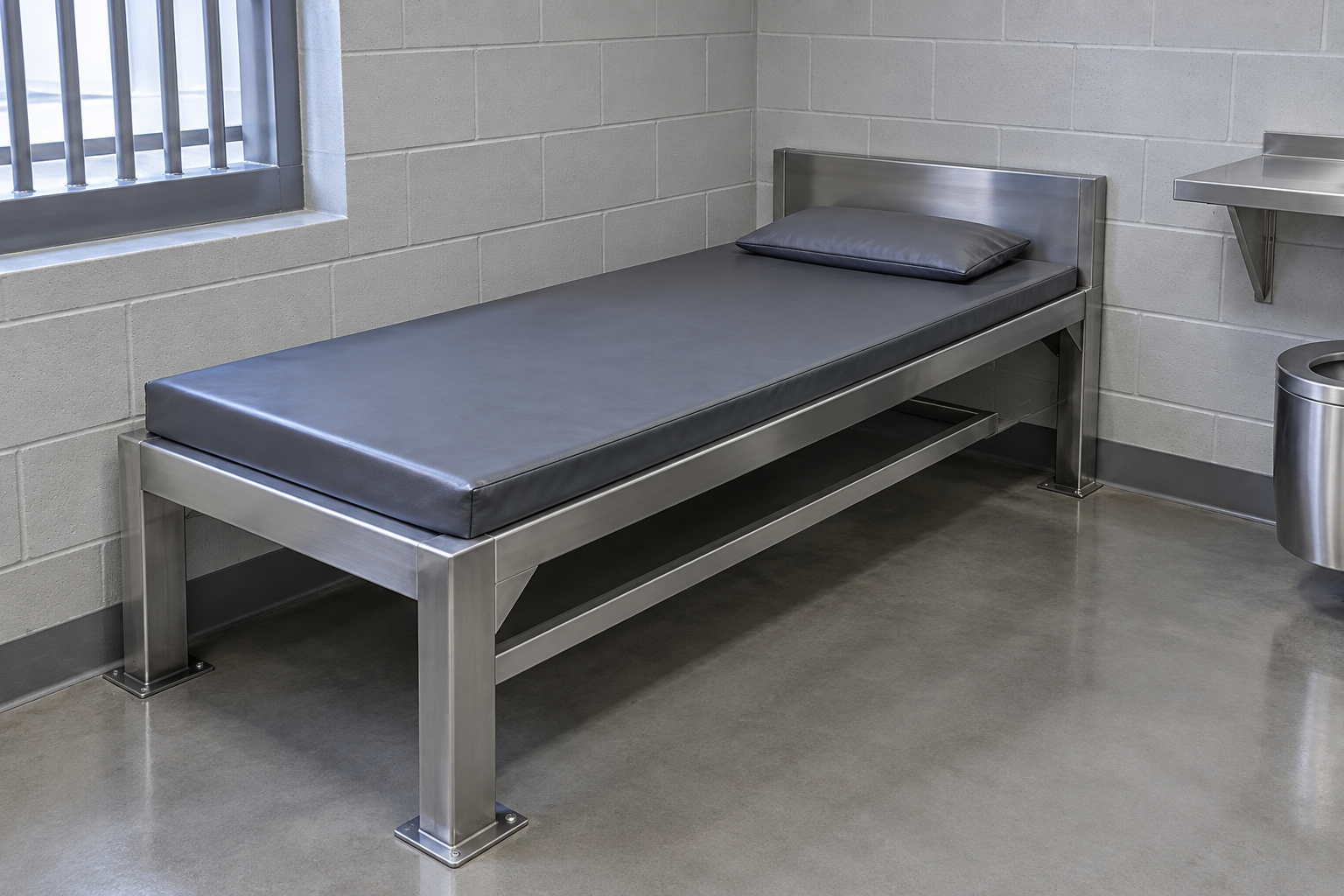
Ⅰ.Different design logic :
The first priority for prison beds is to eliminate security risks, and the second priority is sleep and rest.
Prison beds are typically fixed to the wall or floor and cannot be moved, preventing them from being used as weapons or other security threats. The bed structure is extremely simple, without unnecessary decorations or gaps, designed to prevent prisoners from concealing contraband.
The design of standard beds revolves around comfort, aesthetics, and personalization. From the soft mattress to the carefully selected bed frame, and then to the matching bedside tables and bedding, every detail is designed to provide users with the best sleep experience and visual enjoyment.
Ⅱ.Different materials and structures :
Prison beds are primarily metal-framed, prioritizing extreme sturdiness . The bed frame is constructed from cold-rolled steel plates or high-quality square tubing, typically with a wall thickness of 1.2mm–2.0mm . The bed slats are made of 13mm–15mm thick multi-layered solid wood boards or plywood , with surface treatment including electrostatic powder coating and anti-corrosion/rust prevention . The structure is fully disassembled, reinforced with bolts, or uses snap-fit mechanisms, ensuring stability and preventing wobbling .
The choice of materials for a standard bed is quite diverse ; bed frames can be made of solid wood, particleboard, metal, upholstered materials , and more.
Mattresses can be made from a variety of materials, including springs, latex, memory foam, and palm fiber . The structural design places greater emphasis on aesthetics, comfort, and personalized expression .
III. Core Security Differences:
Prison bed:
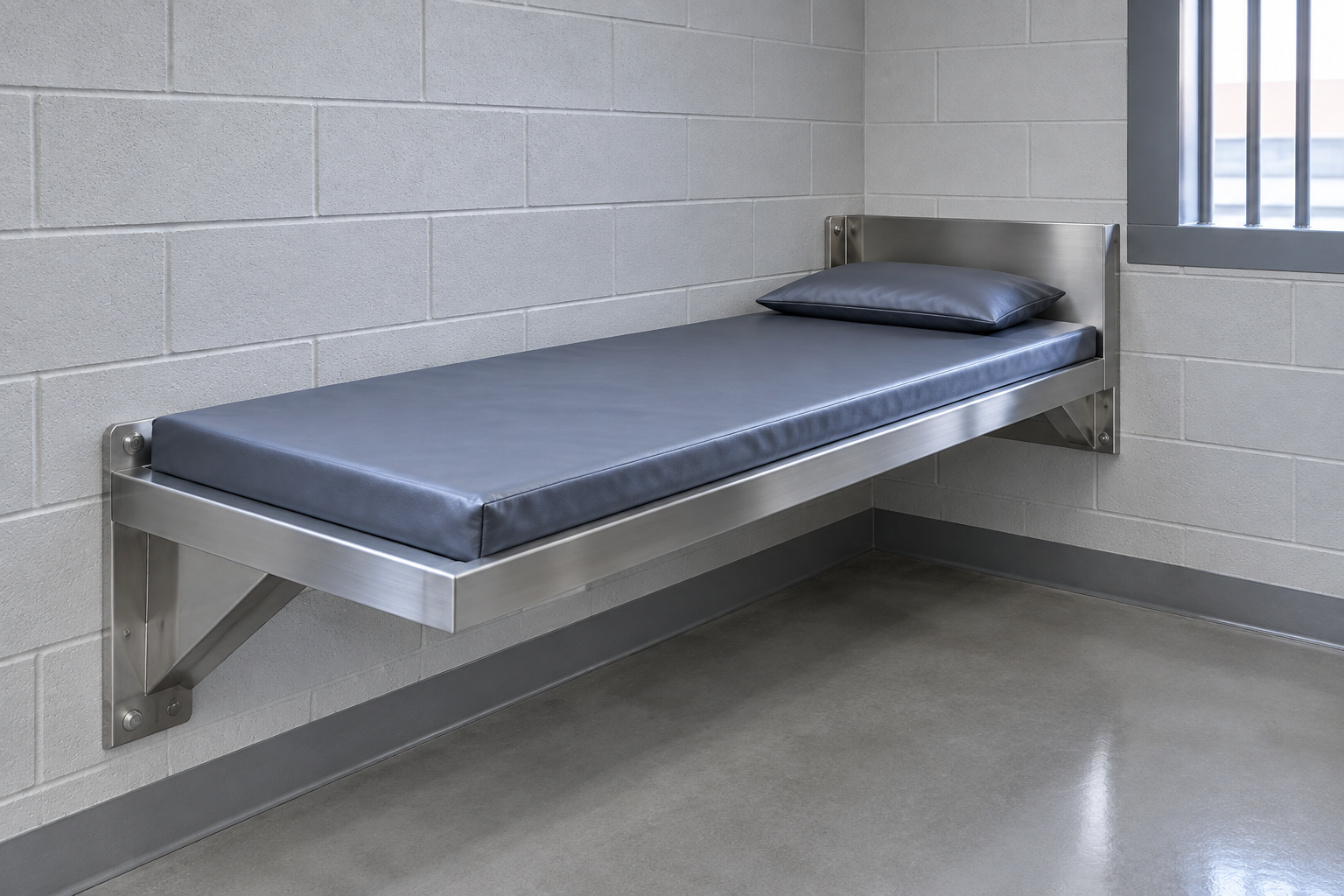
Overall welding process
Employing high-strength integrated welding technology, the connection points are internally reinforced with no exposed bolts on the outside, completely eliminating the risk of illegal disassembly from a physical structural perspective and enhancing resistance to damage.
Strong ground fixation
Thickened flanges are welded to the bottom of the bed and locked to the ground with high-strength expansion bolts to ensure that the bed cannot be moved or overturned, achieving absolute physical stability.
Design of No Dangerous Components
Eliminate all protruding hooks and gaps that could be exploited, and round off all edges and corners to eliminate physical hazards of self-injury and self-harm from the details.
Anti-clamping point safety optimization
To meet the high security requirements, a special anti-entanglement structure design is adopted to eliminate the fixing points where ropes become entangled, reducing the risk of violations from the design source and ensuring regulatory safety.
Standard bed:
Convenience is paramount; the frame is detachable, facilitating logistics, transportation, and moving storage, meeting the needs of frequent changes in living environment.
Prioritizing cost, the company uses thin tubing and plastic fittings to reduce production and procurement costs, targeting the mass consumer market.
Quick assembly: The simple structure and exposed screws allow for quick assembly without the need for specialized tools.
Ⅳ.Costs and Maintenance:
Standard bed:
Initial purchases are affordable, with low procurement costs, and can quickly complete initial configuration, making them suitable for temporary needs in short-term, low-intensity usage scenarios.
The long-term costs are high, the wear and tear is significant, the material is thin and easily deformed and damaged, and maintenance costs are required every year; mass replacement is needed every 3-5 years, and the cost of labor maintenance and replacement accumulates year by year, resulting in high overall costs in the long term.
Prison bed:
The initial procurement involved a high-standard, one-time investment, employing an integrally welded, thickened metal structure, adhering to safety standards for regulatory sites, and having stringent requirements for raw materials and processes, resulting in a high initial construction cost.
Long-term costs: extremely low and stable and controllable, with no easily damaged or consumable parts, and a designed service life of more than 15 years; daily cleaning and disinfection are required, with almost no maintenance expenses, and the overall cost throughout the entire life cycle is far lower than that of ordinary beds.
Ⅴ.Maintain cleanliness
prison bed
Daily cleaning
Wipe the surface with water and neutral disinfectant. The perforated bed board can be directly rinsed with water for cleaning, eliminating any dead corners and greatly improving cleaning efficiency.
Regular inspection
The focus is on inspecting the ground anchors and welds. Without disassembling the bed, potential hazards can be quickly identified, ensuring the structure’s stability and safety.
Maintaining taboos
Prolonged immersion in strong acids or alkalis is strictly prohibited to prevent corrosion of the surface coating and damage to its anti-corrosion and anti-rust properties.
Standard bed
Daily cleaning
Dirt and bacteria can easily accumulate in the gaps between wooden boards and in soft fabric cushions. The cleaning process is cumbersome and it is difficult to completely eliminate hygiene hazards.
Structural maintenance
Numerous exposed screws are prone to loosening and require regular inspection and tightening, which consumes manpower and time costs and requires frequent maintenance.
Damage Repair
Thin steel pipes cannot be repaired after being bumped and deformed; if a part is damaged, the entire machine must be replaced, resulting in high maintenance costs over the long term.
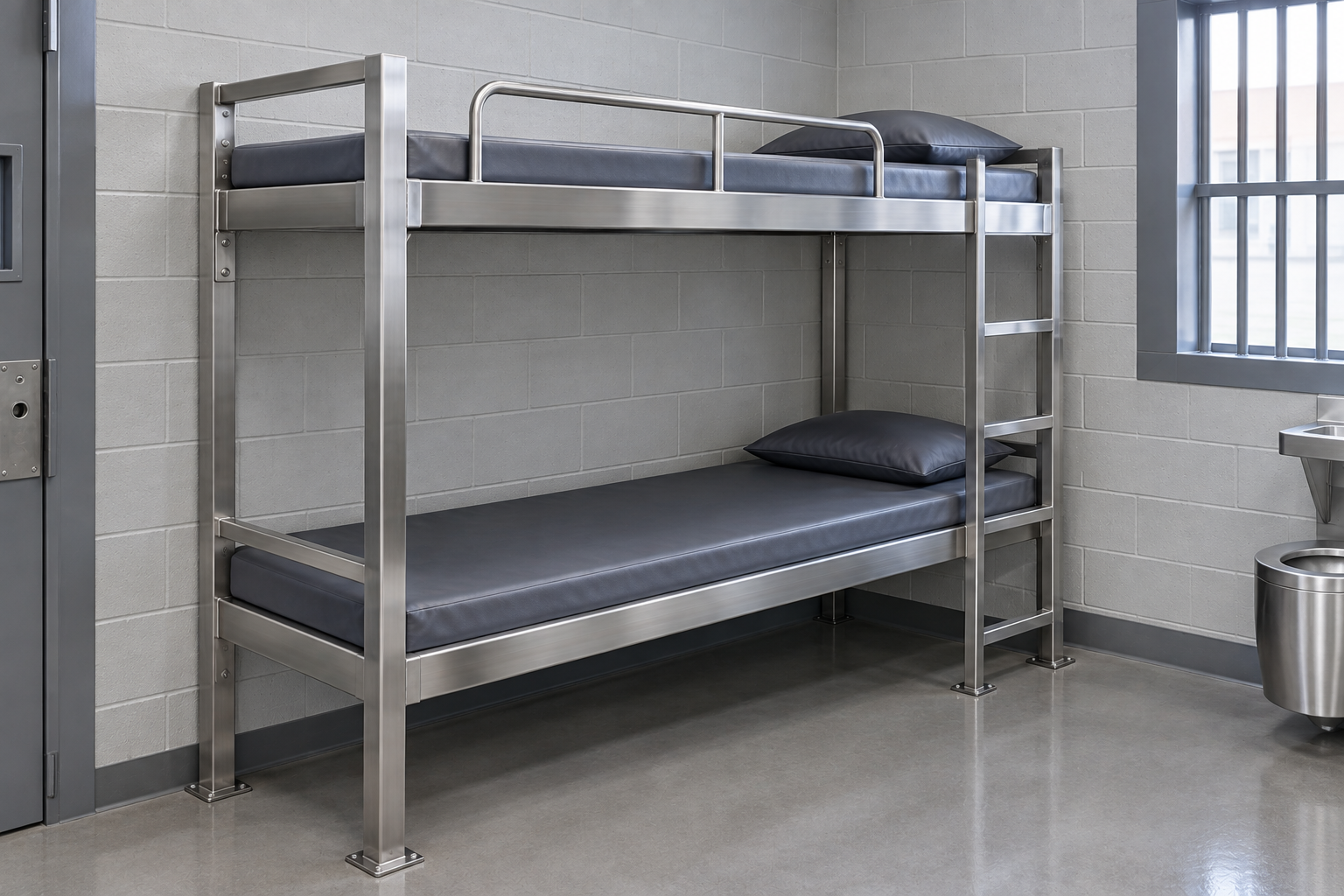
How to make the right choice?
When procuring prison beds for regulatory agencies, the following standards should ideally be met to ensure project acceptance:
Material verification
If the pipe wall thickness is confirmed to be ≥2.0mm, the original manufacturer’s material testing report must be obtained to ensure that the raw materials meet the relevant standards.
Structure Check
It adopts an integral welding process, a fully concealed fastener design, and rounded corners to eliminate the risk of exposed screws.
Fixed scheme
The ground-embedded flange fixing method must be used, and the supplier must provide detailed construction and installation drawings and foundation reinforcement plan.
Security indicators
Strictly adhere to anti-stretching design standards, ensure compliant guardrail spacing, and possess flame-retardant performance certification and load-bearing safety test reports.
Customization capabilities
It supports single-layer or bunk bed structure adjustments, and the size can be fine-tuned according to the actual space of the prison cell to meet personalized needs.
Delivery and after-sales service
We have a clear production cycle, provide professional on-site installation guidance, promise a product warranty period of ≥5 years, and offer timely after-sales service.
FAQ
1.Why are metal prison beds safer than wooden or plastic beds?
Metal prison beds are fully welded, tamper-proof, and more difficult to disassemble than many wooden or plastic beds, making them more suitable for correctional environments.
2.Can prison beds help reduce overcrowding?
Prison beds themselves cannot solve the problem of overcrowding, but bunk beds and double bunk beds can help facilities make more efficient use of available space while reducing the need for inappropriate sleeping arrangements.
3.Are bunk beds in a three-story prison safe?
Bunk beds in three-person prisons may be useful in some facilities, but ceiling height, visibility, supervision, and safe access to the upper level need to be carefully considered.
4.What features should a secure prison bed include?
Secure prison beds should include robust welded steel structures, tamper-proof fastening devices, sealed pipe ends where appropriate, and designs suitable for high-occupancy facility environments.
5.How long is the lifespan of a prison bed?
Under proper maintenance, powder-coated steel prison beds can last for more than 15 years; 304 stainless steel prison beds have stronger corrosion resistance and a lifespan of 20–25 years.
Where can I buy a durable prison bed?
BaCai Stainless Steel Products Factory manufactures and supplies steel bunk beds , double bunk beds, triple bunk beds , and metal bed frames , suitable for high-occupancy environments.