
As a purchasing agent, you might find that stainless steel urinals look very similar, but their prices can vary significantly. How do you choose? How can you ensure quality without exceeding your budget? We need to understand the factors that influence the cost and price of urinals, and then make a choice based on our actual needs.
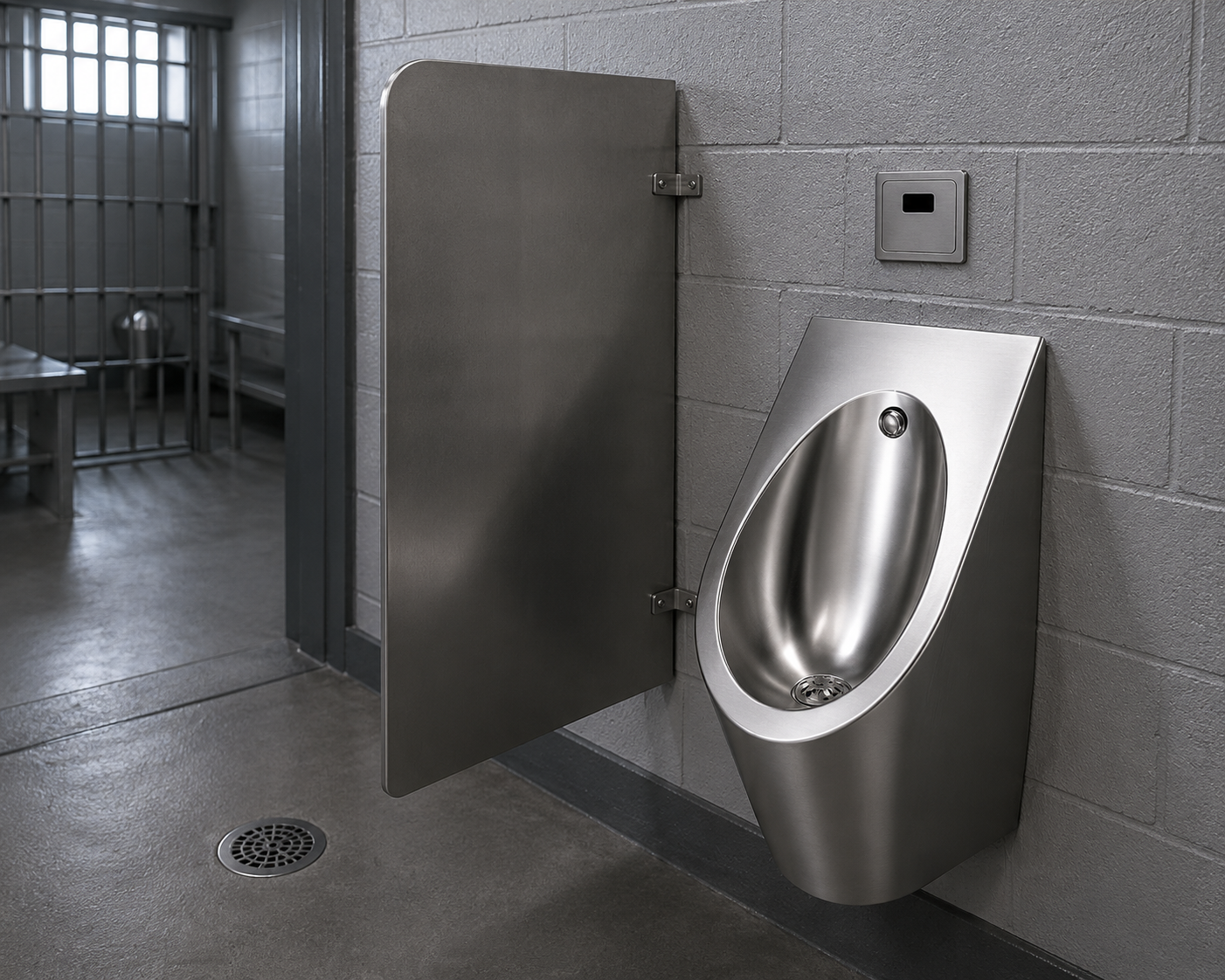
Ⅰ: Stainless Steel Grades
Stainless steel comes in many grades, the most commonly used being 201, 304, and 316 stainless steel:
201 is the cheapest, but its rust resistance is limited, and its performance in humid environments is average;
304 offers the best value for money, has the widest range of applications, good rust resistance, and is significantly more expensive than 201 but cheaper than 316;
316 has the best performance, strong corrosion and rust resistance, and is commonly used in coastal areas and chemical plants.
Urinals used in prison projects typically use the most cost-effective 304 material. If the urinal needs to withstand highly corrosive environments and your budget allows, you can choose 316 stainless steel.
II. Manufacturing Process
Different manufacturing processes result in significant price differences.
Stainless steel urinals are manufactured using two methods: separate welding and one-piece stretching. Separate welding involves stamping each component separately and then welding them together, resulting in lower production costs and a relatively cheaper price.
One-piece stretching uses a large hydraulic press to hydraulically form a single piece of steel, eliminating the need for separate splicing. This results in a tightly woven, seamless urinal structure. One-piece stretching urinals have a higher production threshold, requiring large hydraulic equipment, and are therefore more expensive.
III. Flushing System
In addition to the urinal itself, a flushing system is essential, often overlooked during procurement. Flushing systems generally come in two types: manual press-type and automatic flushing type, with significant price differences.
1. Manual Press-Type Flushing
This consists of a press valve, piping, and a delay piston. It relies on water pressure for flushing. Users manually press the valve, which controls the water flow, flushing for 5-10 seconds. It has a simple structure and low cost.
2. Infrared Sensor Flushing: This system uses infrared sensors to detect the human body and a solenoid valve to control water flow. Flushing begins when a person approaches, requiring no manual operation; it’s fully automatic, convenient, and water-saving. However, the sensor system includes a complete system with sensors, solenoid valves, batteries, and electronic components, making it significantly more expensive than a manual push-button system.
Infrared sensor flushing systems are convenient but expensive, while manual push-button flushing systems are cheaper. We recommend choosing based on your site’s piping layout and budget.
IV. Security Level
Prison projects differ from other engineering projects. While other projects prioritize appearance and practicality, prison projects prioritize security. Different security levels significantly impact urinal design requirements, resulting in substantial differences in final cost.
1. Overall Reinforcement Against Vandalism:
Vandalism prevention refers to impact and deformation resistance, requiring a two-pronged approach:
First, vandal-resistant urinals use thickened stainless steel plates (1.2-1.5mm), avoiding the use of commercially available 0.6-0.8mm plates. Thicker plates are more robust and have greater load-bearing capacity.
Second, vandal-resistant urinals employ a one-piece tensile structure. A one-piece tensile mechanism offers greater strength and is less prone to deformation.
2. Tamper-Proof Fasteners:
Prison urinals have no exposed screws or accessories, making them impossible to disassemble from the outside. Any tool within a prison could potentially be modified into a weapon by inmates. Therefore, prison equipment must be tamper-proof, with no exposed screws or fasteners to prevent potential dangerous behavior by inmates.
3. Concealed Piping System to Prevent Containment of Contraband:
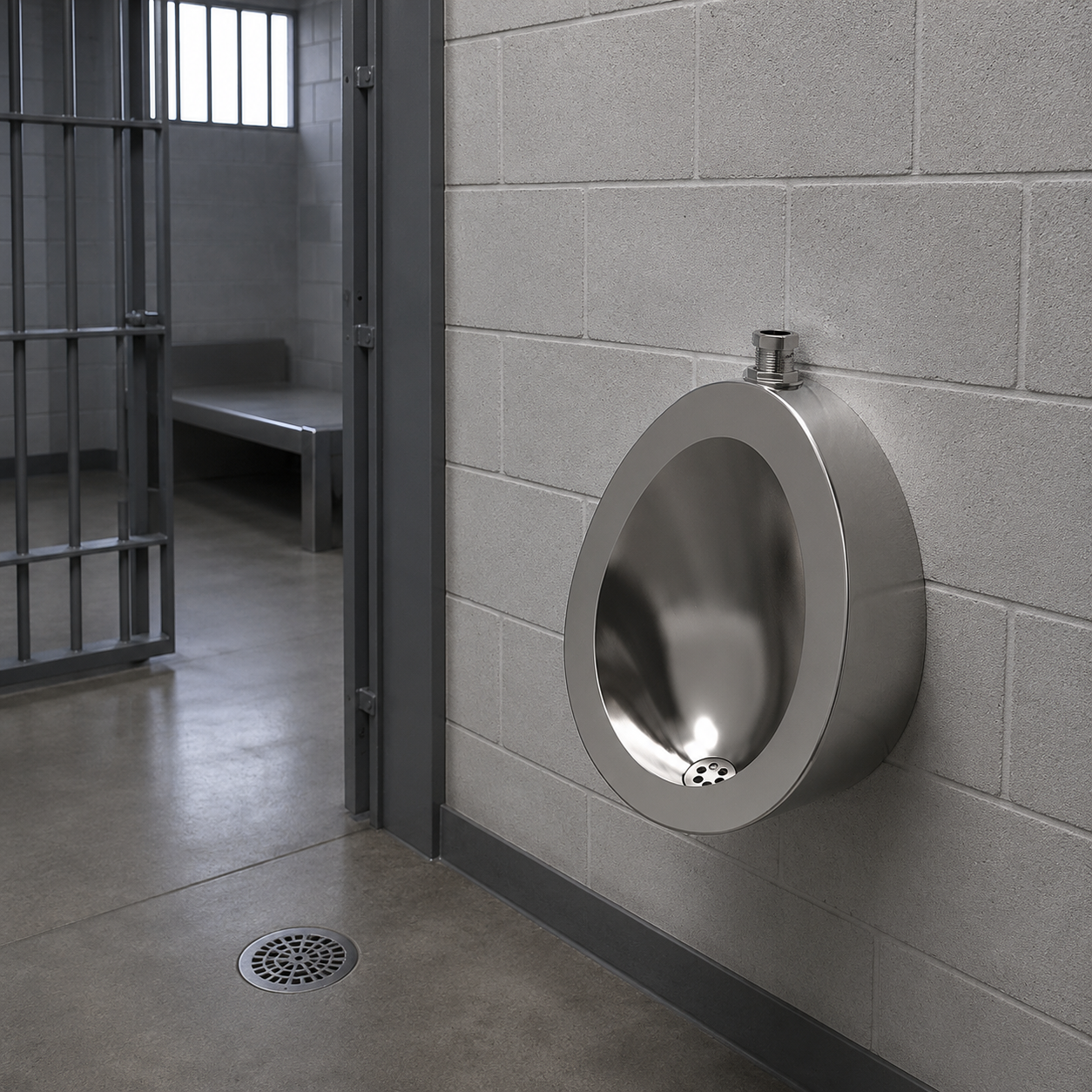
Inmates may use pipes to hide and pass contraband. Prison urinals typically have the pipes designed into the back or within the wall, with the water inlet and drainage systems completely hidden, effectively blocking any channels for concealment or transfer of contraband.
4. Rounded Corner Design to Prevent Collisions:
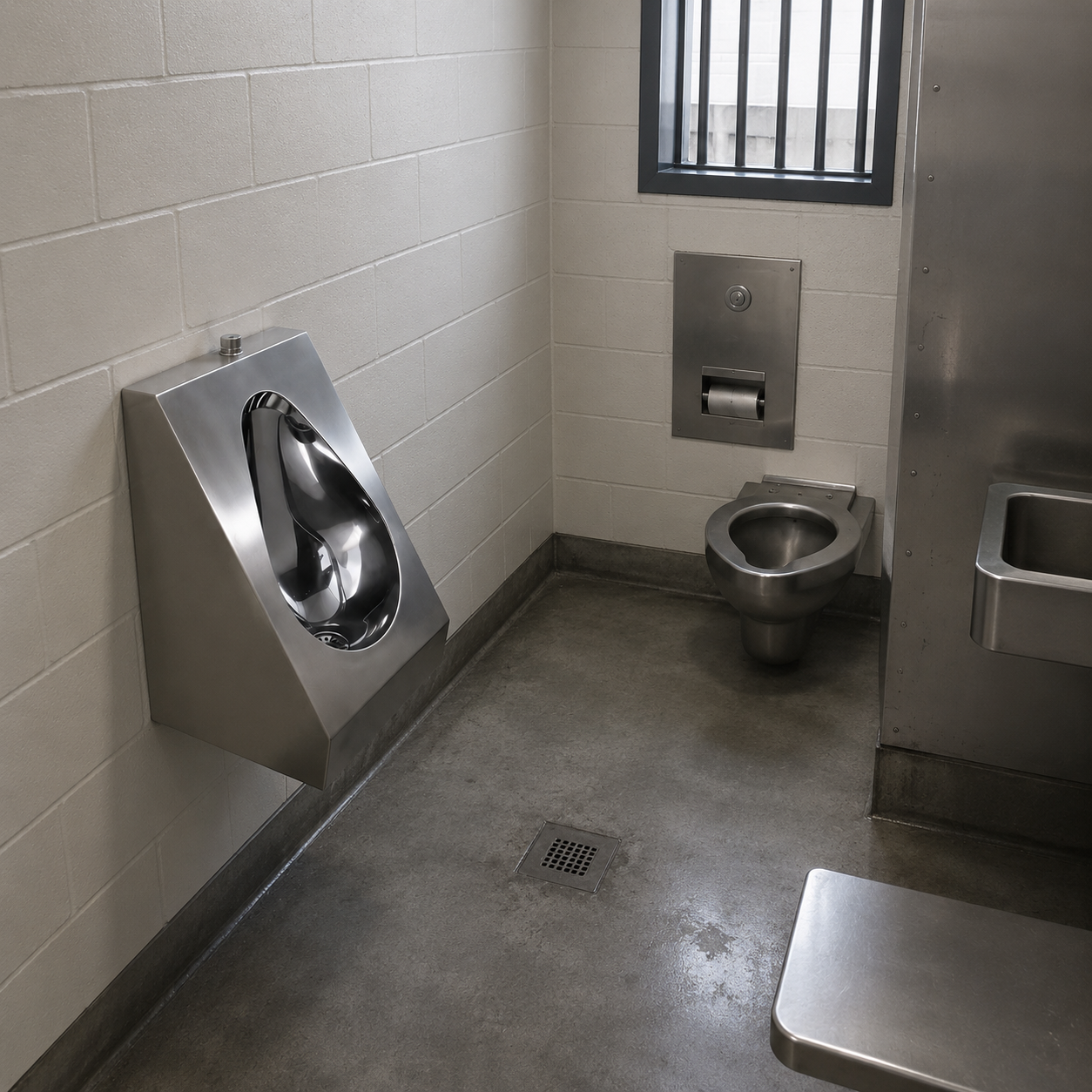
Security-grade urinals feature a rounded corner design, eliminating sharp edges. All contact points undergo multi-layered fine polishing and rounding treatment, and all right angles are ground into smooth curved surfaces, eliminating any sharp points that could be polished or bumped, preventing safety hazards such as collisions, fights, and self-harm.
5. Anti-Hanging Design:
Anti-hanging urinals have no protrusions, supports, or handles as hanging points. The overall lines are smooth, with no entanglement points, eliminating the risk of inmates hanging themselves.
All designs of the stainless steel urinals used in prisons are based on five core requirements: prevention of vandalism, self-harm, concealment, hanging, and tampering. Each additional design requirement increases the corresponding cost, which is the fundamental difference in price between them and ordinary urinals.
Ⅴ. Standard Products vs. Customized Services
When purchasing stainless steel urinals, if the factory already offers the existing style and size, there’s no need for new molds, resulting in no additional mold costs and a relatively fixed price.
However, if customized services are added, such as changes to dimensions, inlet/drainage positions, surface treatment, branding, or installation methods, the factory needs to redesign and develop new molds, increasing production costs and making the price significantly higher than standard products.
Ⅵ. Order Quantity
The order quantity affects the discount on the unit price of prison urinals. Small, scattered orders cannot spread the manufacturer’s production costs, making suppliers less willing to offer larger discounts. Consolidating orders in bulk allows for price negotiations with the manufacturer and securing more favorable discounts.
Ⅶ. Manufacturers vs. Distributors
Should you purchase stainless steel urinals from manufacturers or distributors for your prison urinal project? From a comprehensive cost perspective, manufacturers generally offer better prices than distributors. If a distributor’s price is lower than the manufacturer’s, it may indicate a reduction in specifications. If you have scattered orders, purchasing from a distributor is more suitable, as distributors have stock and offer flexible delivery. For bulk purchases, it’s advisable to buy directly from the manufacturer, as this ensures both price and after-sales support.
How to choose the most suitable stainless steel urinal based on your budget?
The price of stainless steel urinals is influenced by various factors, including materials, thickness, manufacturing process, vandal-proof design, flushing system, customization requirements, and purchase quantity. Purchasing a stainless steel urinal isn’t necessarily about getting the most expensive, nor is it about getting the cheapest. Many projects exceed budgets, fail to pass inspections, and require rework because of a mismatch between the budget and product configuration. A truly scientific purchasing logic is scenario matching + budget stratification + not skimping on essential security features and avoiding unnecessary premiums.
Where can I find a reliable manufacturer of stainless steel urinals for prisons?
BaCai Stainless Steel Products Factory is a factory specializing in the production of stainless steel prison supplies. All products are made of 304/316 stainless steel. We accept OEM and ODM customization and have exported to over 100 countries, serving over 200 prison projects. With extensive experience in prison supplies production, we provide comprehensive technical support, installation guidance, and maintenance advice to ensure the smooth acceptance of your prison projects.
FAQ:
1. How much does a stainless steel urinal cost?
| Product Type | Reference Price (USD) |
| Wall-mounted Stainless Steel Urinal | $60–120 |
| Floor-standing Stainless Steel Urinal | $120–250 |
| 316 Stainless Steel Urinal | $180–350 |
| Custom Stainless Steel Urinal | $200–600+ |
2. Why are stainless steel urinals more expensive than ceramic models?
Because stainless steel is much more expensive than ceramic. Ceramic is made from clay and glaze, which is relatively easy to obtain. Stainless steel is a metal material that requires mining and smelting, making its cost several times higher than ceramic. Therefore, the corresponding product price is much higher.
3. Are vandal-resistant urinals worth the extra cost?
Vandal-resistant urinals need to withstand impacts, so the stainless steel plates used are thicker, reaching 1.2-1.5mm, which is much more expensive than the commonly used 0.6-0.8mm stainless steel plates on the market. Vandal-resistant urinals are made using a one-piece molding process, where a single piece of stainless steel is die-cast using a hydraulic press. This makes them stronger and more robust than welded urinals. However, large hydraulic presses are expensive, increasing the processing cost of the urinals and further widening the price gap with ordinary stainless steel urinals.
4. Can stainless steel urinals be customized?
The style, size, inlet and outlet of stainless steel urinals, as well as color and logo, can all be customized.
5. How long does a stainless steel urinal last?
304 stainless steel urinals can last 5-10 years; 316 stainless steel urinals can last 15 years or more.